BoostOne, Author at Boost One SEO | Page 2 of 24

Which AI Search Platform Is Actually Sending You Customers

Most businesses treat AI search as one thing. You either show up in it or you don’t.

That framing costs money. ChatGPT, Google AI Mode, Perplexity and Gemini each build their answers from different source pools, using different selection logic, and they send you visitors who behave nothing alike once they land. One of them sends the highest volume. A different one sends the highest converting traffic per visit. A third sends barely any traffic at all but is growing faster than the rest.

If you’re going to spend money getting recommended by machines, you should know which machine is worth the spend.

The Traffic Split Is Nowhere Near Even

how much traffic from AI

Start with raw referrals. Across the 2026 studies, ChatGPT sits somewhere between 63% and 78% of all AI referral traffic depending on whose panel you read. Statcounter had it at 78% globally in March 2026. SE Ranking put it closer to 75%. A B2B-weighted panel from Goodie put it at 63%, which tells you the split shifts hard by sector.

Below that, Gemini has been the story of the year. It passed Perplexity in early 2026 and roughly quadrupled its referral share inside twelve months. Perplexity has gone flat or slightly down, holding around 7%. Copilot sits near 3.5%.

Two caveats before you act on any of that. First, the numbers move monthly, sometimes violently. Second, all AI platforms combined still account for a fraction of a percent of total web traffic. Organic search sends vastly more visitors. Anyone telling you to abandon SEO for AI is selling something.

Volume and Value Are Different Numbers

ai referral traffic

Here’s where the ranking scrambles. Referral counts measure visits. Visits are not customers.

The conversion data from early 2026 shows a spread wide enough to change your priorities entirely. ChatGPT-referred visitors converted somewhere in the 14% to 16% range across the panels studied. Perplexity landed near 10.5%. Gemini came in around 3%. For comparison, Google organic traffic converted at roughly 2% to 3%.

Read that again. Gemini is the fastest-growing referral source and the weakest converter of the group. ChatGPT sends the most traffic and converts it best. Perplexity sends little traffic that punches well above its weight.

Engagement follows the same pattern. AI-referred sessions run roughly 30% longer than Google organic sessions and generate more pageviews per visit. Someone who arrives from an AI answer has already been pre-qualified by the model. They didn’t scan ten results and click yours on a hunch. They were told you were a fit.

That’s the entire argument for generative engine optimization as a budget line rather than an experiment.

ChatGPT: Structure and Third Party Coverage Decide It

AI sending customers

ChatGPT does not simply answer from memory anymore. When a query triggers search, it breaks your question into sub-questions, retrieves live pages for each, and then picks a handful to cite.

The retrieval and the citation are separate steps, and that distinction matters. Research from 2025 and 2026 found ChatGPT cites only around 15% of the pages it actually reads. Being retrieved gets you nothing. Being quoted gets you the customer.

What separates the 15% from the rest comes down to two things. Position on the page is one. A 2026 study found 44.2% of ChatGPT citations came from the first 30% of a page. Bury your answer under four paragraphs of throat-clearing and you forfeit most of your odds. The other is who else talks about you. Wikipedia, Reddit, LinkedIn and editorial publications dominate the source pool, while brand-owned pages are structurally underrepresented.

One technical note worth acting on today: check that your robots.txt and your CDN allow OAI-SearchBot. Cloudflare has blocked AI crawlers by default since mid-2025, and plenty of sites are invisible for that reason alone without knowing it.

Google AI Mode: One Question Becomes Twelve

leads from AI

AI Mode works through query fan-out. It takes the question typed by the user, splits it into multiple hidden sub-queries, runs them in parallel, and assembles an answer from whatever surfaces across that whole set.

The consequence is the most misunderstood fact in search right now. Ahrefs found AI Mode and AI Overviews cite the same URLs only 13.7% of the time, despite reaching the same conclusion in 86% of cases. Other analyses put the overlap between AI Mode citations and the organic top ten at around 14%.

Your number one ranking does not carry over. AI Mode selects passages, not pages. A tight 50-word block that directly answers one specific sub-question will beat a 3,000-word guide with no clean extraction points, every time.

The practical move is coverage. Instead of one page per keyword, build pages that answer the full question space around a topic: pricing, comparisons, requirements, timelines, objections. That structure is the core difference in the SEO versus GEO discussion, and it’s why sites built on generic templated content struggle here. If your pages came out of a builder that generated filler copy, there’s nothing specific enough to extract, which is one of the sharper points in the debate over whether AI website builders are good for SEO.

Perplexity: Fresh, Factual, Fast to Reward You

Perplexity runs a live web search on every single query. No answering from memory. It visits roughly ten pages per question and cites three or four of them, which is a far tighter funnel than ChatGPT’s but with mandatory attribution.

It weights freshness more heavily than any other platform. A well-structured piece published today can appear in Perplexity citations within hours, which makes it the only realistic short-term win available to a newer site. It also runs a multi-stage reranking pipeline that checks semantic relevance, then structural quality, then authority, with commercial queries leaning harder on review platforms like G2, Clutch and Trustpilot.

Small traffic numbers, high intent, quick feedback loop. Treat it as your testing ground rather than your main event.

Gemini: Your Google SEO, Repurposed

Gemini grounds its answers in Google Search. That means the retrieval layer is Google’s index, and everything you’ve already earned in rankings, links and crawlability feeds it directly.

There’s one setting that overrides all of it. Google-Extended controls whether your content is eligible for grounding in Gemini apps. Block it, often through a well-intentioned privacy setting, and you remove yourself from Gemini entirely.

Gemini’s citation mix leans heavily on user-generated platforms. Reddit, YouTube and Quora appear far more often here than in ChatGPT’s pool. If your category has active Reddit threads or comparison videos and you’re absent from both, you’re missing the ground Gemini stands on.

Your Analytics Is Underreporting All Four

Before you judge any platform on your own numbers, fix the measurement.

Between 35% and 70% of AI referral sessions arrive with no referrer header and get dumped into Direct. Worse, GA4’s native AI Assistant channel, rolled out in May 2026, covers ChatGPT, Gemini, Copilot and a few others but leaves out Perplexity and Claude entirely. Perplexity traffic lands in generic Referral.

Build a custom channel group with regex filters covering all of them. Then verify your site in Bing Webmaster Tools and open the AI Performance report, which since February 2026 shows actual citation counts rather than guesses. It’s free and it takes about ten minutes.

The Priority Verdict

For most North American businesses, in this order:

1. ChatGPT. Highest volume, highest conversion, widest lead. Nothing else is close on either axis. If you do one thing, front-load direct answers in the first third of every important page and confirm OAI-SearchBot isn’t blocked.

2. Google AI Mode. Second priority because the audience is enormous and the work compounds. Fan-out coverage lifts your AI Mode presence, your AI Overview citations and your long-tail rankings at the same time. No other platform gives you three returns on one investment.

3. Perplexity. Third on volume, but first on speed. Use it to test whether a new page can earn citations before you scale the format across your site.

4. Gemini. Ranked fourth only because the conversion rate is weak today and because good Google SEO already covers most of it. Its growth curve means that ordering may not hold through 2027.

Where Your Industry Changes the Order

That sequence assumes a general business. Two categories should reorder it.

Manufacturers and industrial suppliers should move Perplexity up. Technical buyers researching specifications, tolerances and compliance behave like researchers, and Perplexity’s evidence-first ranking rewards spec sheets, datasheets and documented processes that most manufacturing sites already own but never structure for extraction. We’ve written more on GEO for manufacturing businesses.

Clinics and healthcare practices should move Google AI Mode to the top. Health queries carry heavier trust weighting, local intent dominates, and Google’s grounding leans hard on established medical sources and verified practice data. The route in is entity consistency and credentialed authorship, which we cover in GEO for clinics.

Start With One

The temptation is to chase all four. Don’t. The underlying content architecture transfers between platforms, so the fastest route is to do the work properly for ChatGPT, measure it honestly, then extend the same structure outward. That sequencing is the whole basis of how we approach AI search optimization for clients. Pick the platform your buyers actually use. Fix your measurement first so you can prove what happens next.


Read More
BoostOne August 24, 2026 0 Comments

10 Prompts That Tell You Whether ChatGPT Recommends Your Business

Someone types “best bookkeeper in Toronto for small incorporated businesses” into ChatGPT. Back comes a short list of four names, a sentence of reasoning for each, and maybe a link or two. The person picks one and books a call.

You never see any of it. No impression logged in Search Console. No referrer in your analytics. No weekly rank tracker email telling you that you dropped off a list you didn’t know existed.

That gap is the problem. Reporting was built for a world where people clicked ten blue links. When the answer arrives pre-chewed, your visibility goes dark unless you go looking for it on purpose.

The good news: you can check this yourself in about twenty minutes. Below are ten prompts to copy and paste, a scoring system out of 30, and what each type of failure is actually telling you.

First, Set Up a Clean Test

web user using ChatGPT

Skip this part and your results will be flattering nonsense.

Log out, or use a temporary chat. ChatGPT remembers you. If you’ve spent six months asking it to rewrite your own service pages, it knows your brand and will happily bring it up. That’s not a recommendation, that’s an echo. Turn off memory and personalization, or open an incognito window.

Start a fresh chat for every prompt. Answers within one thread contaminate each other. Name your business in message two and it keeps surfacing in message five.

Run each prompt twice: once with web search on, once off. With search off, you’re testing what the model absorbed during training. With search on, you’re testing whether your site and your mentions are retrievable and quotable right now.

Name the location precisely. The model does not reliably know where you are, and North America is loaded with duplicate city names. Write “in London, Ontario” or “serving the Dallas Fort Worth metro” rather than “near me”. Include the province or state every single time.

Selling on both sides of the border? Test both. Run prompts 1 to 3 once for a Canadian city and once for a US one. Source density is uneven, and a firm scoring 20 in Seattle can score 6 in Saskatoon simply because fewer publications cover that market.

Save everything with a date. Paste responses into a doc. Outputs shift week to week, and you want a baseline to compare against later.

Run the same set in Gemini, Perplexity and Copilot when you have time. ChatGPT is the biggest single door, but it isn’t the only one.

The 10 Prompts

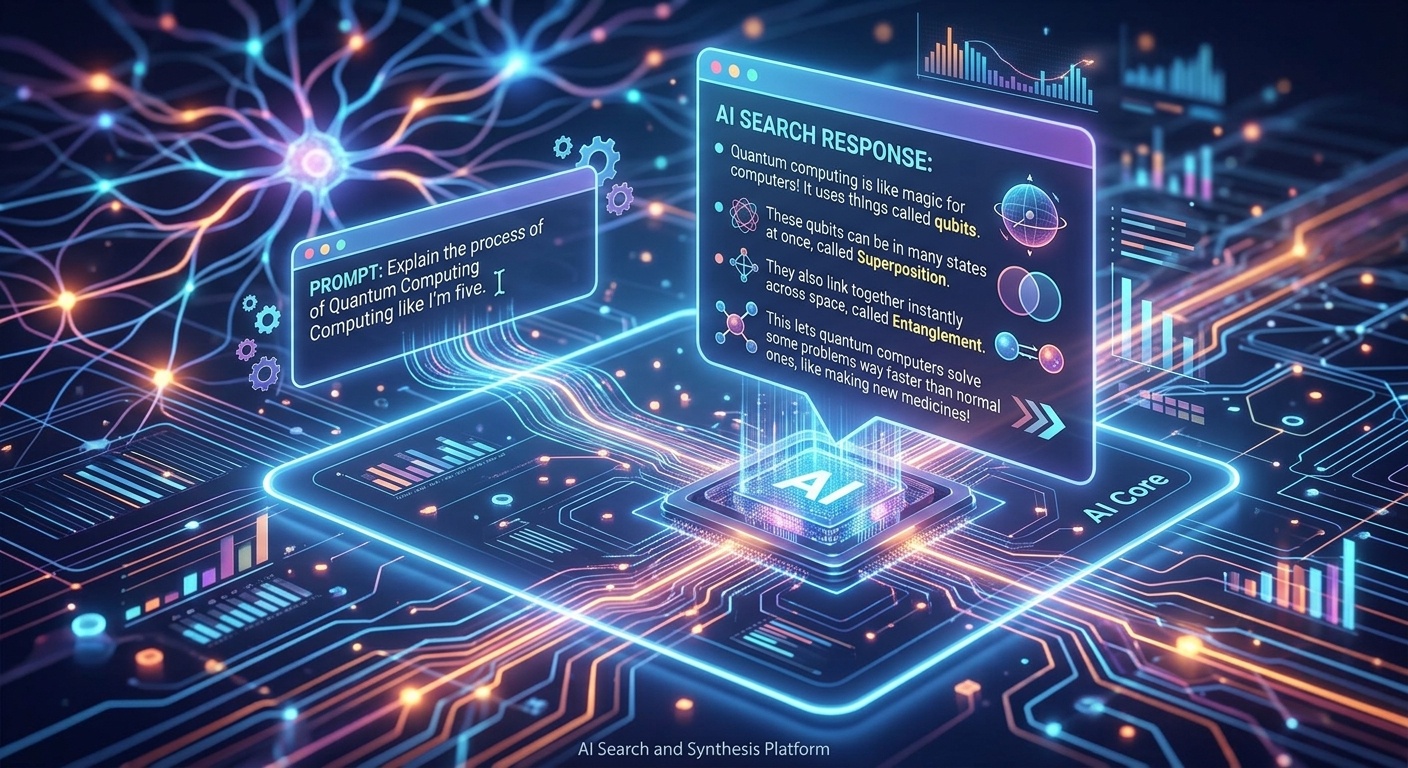
AI search giving an answer after prompt

Prompts 1 to 3: Cold discovery

These simulate a buyer who has never heard of you.

Prompt 1

What are the best [your service] companies in [your city]? List five and explain why you’d suggest each one.

Prompt 2

I run a [customer’s business type] and I’m struggling with [problem you solve]. Who should I hire to fix this? Give me specific companies, not general advice.

Prompt 3

I have a budget of around [typical deal size] for [your service]. Which providers in [your area] would be a sensible fit?

Prompt 3 matters more than people expect. Budget qualifiers reshuffle the list, and plenty of businesses show up for the generic query but vanish once price enters the conversation.

Prompts 4 to 6: Brand knowledge

Now you name yourself and find out what the machine thinks it knows.

Prompt 4

What can you tell me about [Your Business Name] in [City]?

Prompt 5

Is [Your Business Name] a good choice for [specific service or customer type]? What are their strengths and weaknesses?

Prompt 6

What are [Your Business Name]‘s prices, business hours, and service area?

Prompt 6 is your accuracy audit. Wrong hours, a phone number from two moves ago, a service you dropped in 2023: all of it is being handed to prospects as fact.

Prompts 7 to 9: The comparison round

Buyers rarely ask about one company. They ask about the shortlist.

Prompt 7

Compare [Your Business Name] and [Your Closest Competitor]. Which would you recommend and why?

Prompt 8

I’m deciding between [Competitor A] and [Competitor B] for [service]. Is there anyone else in [area] I should be considering?

Prompt 9

What do customers say about [Your Business Name]? Are the reviews positive?

Prompt 8 is the sneaky one. It tests whether you get pulled into a shortlist you weren’t part of, often the last route in when competitors own the obvious queries.

Prompt 10: Source mapping

Prompt 10

If I wanted to research [your service] providers in [your city], which specific websites, directories and review platforms would you check?

This one doesn’t score your business. It tells you where the model looks. Whatever it lists back at you is your target list for citations, listings and outreach over the next quarter.

Score It Out of 30

Give each prompt a score from 0 to 3.

ScoreWhat happened
3Named and recommended, details correct, and your own site referenced or linked
2Named accurately, but positioned below competitors or with no source attached
1Named only after you prompted it directly, or named with wrong or vague details
0Not mentioned at all, or described incorrectly enough to lose you the sale

For prompt 10, score 3 if you have a live, complete, reviewed profile on most of the sources it names. Score 0 if you’re on none of them.

Add up the ten scores.

  • 24 to 30: You’re in the recommendation set. Protect it and monitor monthly.
  • 16 to 23: Known but not preferred. You’re losing head-to-head comparisons.
  • 8 to 15: Fragile. You exist in fragments, and the model is filling gaps with guesswork.
  • 0 to 7: Effectively invisible. Your competitors are getting the introduction you’re not.

Most owner-run businesses land between 8 and 18 on the first run. That’s normal, and it’s fixable.

What Each Failure Mode Actually Means

Failure 1: Nothing comes back at all

Zeros on prompts 1 through 4 mean there isn’t enough consistent information about your business for the model to treat you as a real, distinct entity. Usually the cause is boring: inconsistent business name and address details across listings, no schema markup, and almost no third party mentions. You’re a website, not a known entity. This is the core problem that generative engine optimization exists to solve.

Failure 2: You appear, but the facts are wrong

Wrong pricing, an old address, a service you dropped years ago. The model isn’t malfunctioning. It’s averaging conflicting sources, and some of those sources are stale. Hunt down the abandoned directory profiles and outdated third party write-ups, then fix the highest authority ones first.

Failure 3: You only exist when you’re named

Strong scores on prompts 4 to 6, weak scores on 1 to 3. You’re in the index but not in the recommendation logic. The missing ingredient is almost always independent corroboration: reviews with substance, case studies, mentions in industry roundups, and press that isn’t self-published.

Failure 4: The model cites a directory instead of your website

You get recommended, but the source is Yelp, Angi, HomeStars or a roundup post from a publisher who has never met you. Your own pages aren’t being quoted because they aren’t easy to quote. Wall-of-text service pages with no clear headings, no direct answers and no specifics get passed over for a directory that states your service area in one clean line. Restructuring your pages around clear questions and clear answers is largely a content writing problem, not a technical one.

Failure 5: You rank well on Google but score badly here

Common, and disorienting. Classic rankings measure link authority and query relevance. AI recommendations run on entity clarity, consistency, corroboration and quotability. The overlap is partial, which is why SEO and GEO are different disciplines rather than the same job with new branding. If you’re already familiar with the frustration of ranking first and still getting no clicks, this is the same disease at a later stage.

Failure 6: Your content sounds like everyone else’s

If your pages were spun up from templates or generic AI drafts, they contain nothing specific enough to cite. No named process, no real numbers, no local detail, no opinion. There is nothing in filler copy worth surfacing. Worth reading if this applies: whether AI website builders are good for SEO.

What To Do With Your Score

Fix in this order, because the sequence matters.

  1. Correct your factual footprint. Same business name, address, phone and service list everywhere it appears online.
  2. Add Organization and Service schema so machines can read the basics without guessing.
  3. Claim and complete a profile on every source prompt 10 named.
  4. Ask for reviews that describe what you did, not just how many stars you get. “They rebuilt our stock system in six weeks” is a citable fact. “Great service” is noise.
  5. Rewrite your three most commercially important pages to answer real buyer questions in plain, specific language.
  6. Publish comparison and alternatives content, since prompts 7 and 8 rely on it existing somewhere.

Re-run It Every Quarter

Score once, fix, then score again ninety days later with the same prompts and rubric. Movement from 11 to 19 is a real result even if your keyword rankings never budged, because more of the conversations that never reach your analytics are going your way. The businesses winning here aren’t the ones with the biggest budgets. They’re the ones who bothered to check.

Read More
BoostOne August 20, 2026 0 Comments

You Still Rank #1 on Google But Nobody’s Clicking Anymore. Here’s Why.

You check your rankings the way you always have. Position one, same as last quarter, same as the quarter before that. Then you open your analytics and the traffic line has been sloping down for months. Form fills are thinner. The phone rings less often. No penalty email arrived, nothing broke, and your competitors have not leapfrogged you.

So what changed?

Ranking #1 but no clicks to show for it has become one of the most common complaints we hear from business owners, and the cause is almost never the thing they suspect. Your ranking did not slip. Everything around your ranking moved.

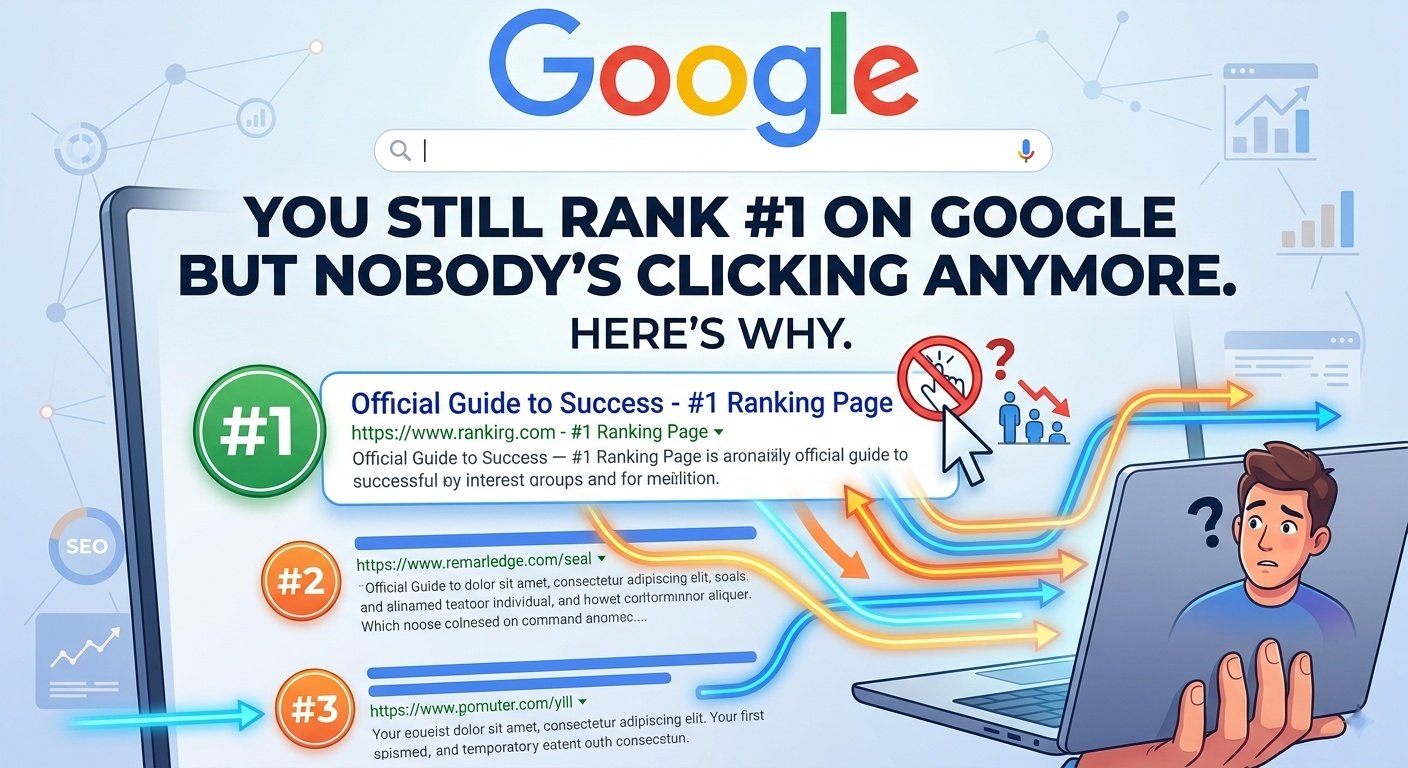
Ranking #1 but no clicks: position one now sits under the answer

position one now sits under the answer

The results page your customers see today looks nothing like the one you optimized for three years ago. Google’s AI Overview sits at the top, answers the question in a paragraph, and pushes the first organic link down past the fold on most screens. Research from Whitespark in 2026 found AI Overviews appearing on roughly 68% of local business queries, well ahead of the traditional local pack.

The effect on clicks has been measured repeatedly, by different companies using different methods, and they all point the same direction. Ahrefs data from December 2025 found the top ranking result loses about 58% of its click-through rate when an AI Overview is present, up from 34.5% in April 2025. Pew Research tracked real browsing behavior and found that only 8% of users clicked a traditional result when an AI summary appeared, compared to 15% when it did not. SparkToro’s 2026 research put the wider picture at 68% of US searches ending with no click to any website at all.

That is the fingerprint most business owners are seeing without recognizing it. Open Google Search Console and compare the last twelve months. If impressions are flat or climbing while clicks fall, you have not lost visibility. You have lost the click that visibility used to guarantee.

Your customer is checking four places before they contact you

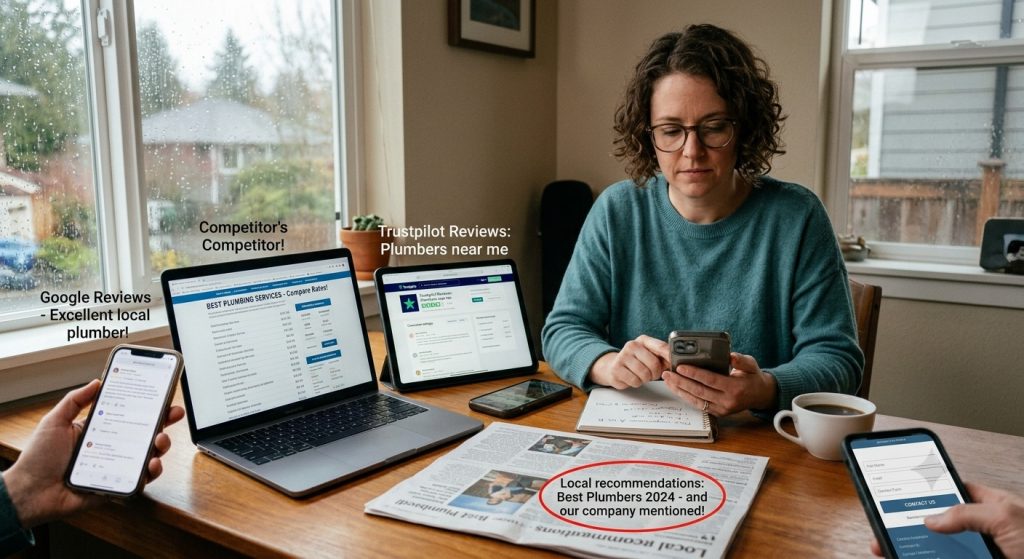
Your customer is checking four places

The other half of the story has nothing to do with Google.

BrightLocal’s 2026 Local Consumer Review Survey found that 45% of consumers had used ChatGPT, Gemini, or Perplexity to find a local business in the previous year. The same survey put that figure at 6% a year earlier. Generative AI is now the third most common way people look for a local business, ahead of Yelp and Tripadvisor. Google is still first, but it dropped 12 percentage points in a single year.

Then there is everything else. Someone researching a service provider might watch a YouTube comparison, read a Reddit thread from two years ago, search TikTok for a walkthrough, check Instagram to see whether the business looks real, and ask an AI assistant to shortlist three options. Adobe Express research from early 2026 found 49% of US consumers had used TikTok as a search engine at some point.

Your prospect is doing all of that before they ever type your business name into Google. By the time they land on your homepage, they have already formed an opinion. Some of them never land on it at all, because they got everything they needed somewhere you were not mentioned.

Ranking is a position. Being the answer is a different job.

Ranking is a position

Here is the part that catches people off guard. Ranking first does not mean you get cited.

An analysis by Omniscient Digital of more than 23,000 AI citations found that roughly 77% of the sources referenced in AI answers about a brand were off-page. Directories, review platforms, forums, third-party articles, video. Not the brand’s own website. AI systems are assembling a picture of you from what other people say, then presenting that picture as the answer.

This is why generative engine optimization has become its own discipline rather than a footnote in an SEO plan. Traditional SEO earns you a position in a list. GEO earns you a place inside the answer, which is a different set of signals: how clearly your site defines what you do and who you serve, how consistently your business details appear across the web, how often independent sources mention you, and how easy your content is for a machine to lift a clean answer out of.

The two are not in competition. If you want the practical breakdown of where they overlap and where they diverge, we covered it in detail in our guide to the difference between SEO and GEO.

Why the leads you do get feel different

Why the leads you do get feel different

Business owners often tell us the drop in volume came with a change in quality, and usually in both directions.

Fewer people arrive at the top of the funnel, because the AI answer handled the “what is” and “how much does it cost” questions that used to bring you informational traffic. What remains is later stage. People who show up now have often compared three providers already and are close to a decision. Seer Interactive’s tracking found AI search visitors convert at meaningfully higher rates than the average organic visitor, which matches what we see in client accounts.

The uncomfortable side of that is your top of funnel content is now doing invisible work. It gets read by a model, summarized, and delivered without a visit. You are still influencing the decision. You just cannot see it in a traffic report, which is why branded search volume, direct traffic, and phone calls have become better health indicators than sessions.

Run this check before you change anything

Five things you can do yourself this week, no tools required beyond what you already have.

Pull a twelve month impressions versus clicks comparison in Search Console. Note which queries lost clicks while holding position.

Take your ten most commercially valuable keywords and search them manually, logged out. Does an AI Overview appear? Are you named inside it, or only below it?

Ask ChatGPT, Gemini, and Perplexity the questions your customers actually ask. “Best [your service] in [your city].” “Who should I hire for X.” Write down which businesses get named and where those answers appear to be sourced from.

Open GA4 and filter referral traffic for chatgpt.com, perplexity.ai, gemini.google.com, and copilot.microsoft.com. Small numbers here are normal. Zero is a warning sign.

Search your own business name and read what comes back on page one. That set of pages is roughly what an AI model sees when it decides whether to recommend you.

What actually moves the needle now

Answer the question in the first fifty words of the page. Models and skim readers both reward a direct response near the top, followed by the detail underneath. Burying your answer under four hundred words of preamble costs you both.

Be specific enough to be quotable. Prices, timeframes, numbers, named locations, dated information. Vague content gets paraphrased into nothing. Concrete content gets cited with your name attached.

Build mentions off your own site. Reviews on Google and industry platforms, accurate listings, guest articles, podcast appearances, a YouTube channel that answers the same questions your service pages do. Since most AI citations come from third-party sources, this is the highest leverage work available to most businesses right now.

Keep the technical base solid. None of the above works if a crawler cannot read your pages cleanly, if your site takes six seconds to load, or if your service pages are one long block of undifferentiated text. This is where our SEO services still do the heavy lifting, because AI answers are built from indexed pages and an unindexable site cannot be quoted. If your site was put together on a drag and drop platform, it is worth reading our breakdown of whether AI website builders are good for SEO before you spend money on content that sits on a shaky foundation.

Do not abandon what is working

There is a temptation to conclude that SEO is finished and start over. That would be a mistake.

Google still handles the largest share of searches by a wide margin, and AI Overviews are assembled largely from pages that already rank. Seer Interactive found that a page cited inside an AI Overview earned around 2.1% CTR, while an uncited page on the same results page earned about 0.9%. Ranking is no longer the finish line, but it is still the entry ticket.

The shift is in the goal. You are no longer trying to own a position on one page. You are trying to be the answer wherever your customer happens to be asking, whether that is Google, an AI assistant, YouTube, a review platform, or a Reddit thread you did not know existed.

Find out where you actually stand

Most businesses in this position do not need a rebuild. They need to know which queries are losing clicks, whether AI tools currently recommend them, and which two or three fixes will recover the most ground.

That is exactly what we look at in a free consultation. We will run your site and your key queries through both traditional and AI search, show you where you are visible, where you are missing, and what it would take to close the gap.

Book your free consultation and let’s find out what your customers are seeing when they look for a business like yours.

Read More
BoostOne August 18, 2026 0 Comments