Which AI Search Platform Is Actually Sending You Customers

Most businesses treat AI search as one thing. You either show up in it or you don’t.
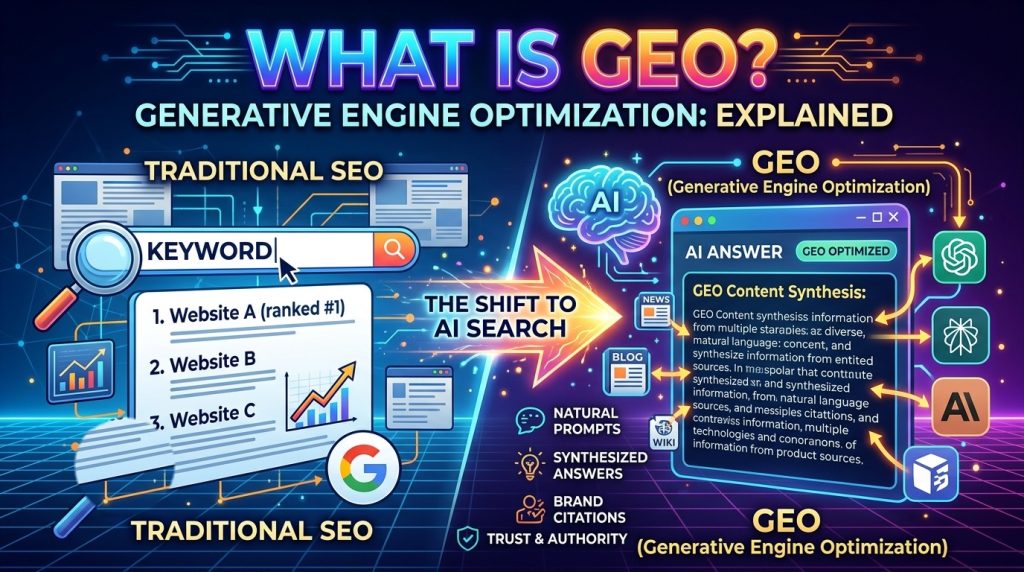
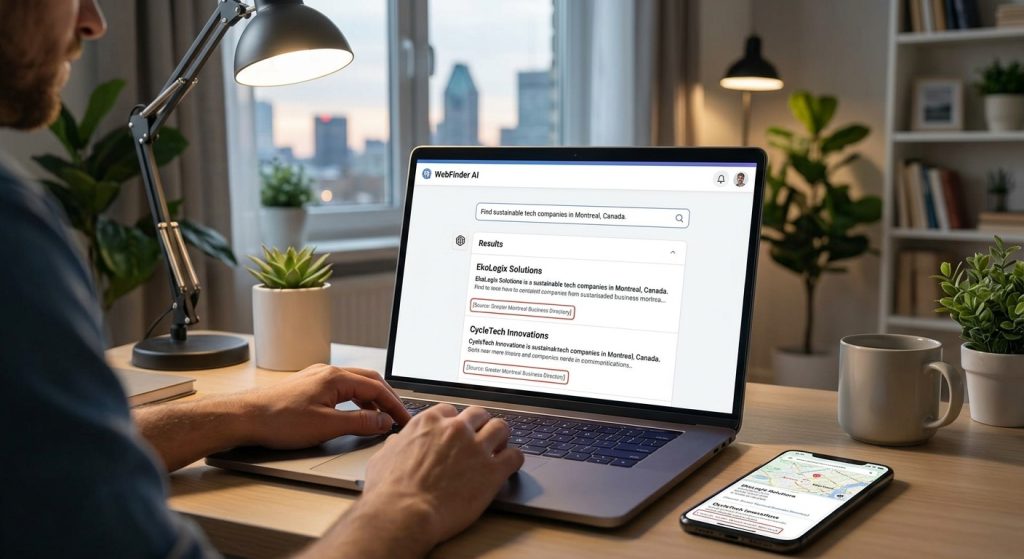
That framing costs money. ChatGPT, Google AI Mode, Perplexity and Gemini each build their answers from different source pools, using different selection logic, and they send you visitors who behave nothing alike once they land. One of them sends the highest volume. A different one sends the highest converting traffic per visit. A third sends barely any traffic at all but is growing faster than the rest.
If you’re going to spend money getting recommended by machines, you should know which machine is worth the spend.
The Traffic Split Is Nowhere Near Even

Start with raw referrals. Across the 2026 studies, ChatGPT sits somewhere between 63% and 78% of all AI referral traffic depending on whose panel you read. Statcounter had it at 78% globally in March 2026. SE Ranking put it closer to 75%. A B2B-weighted panel from Goodie put it at 63%, which tells you the split shifts hard by sector.
Below that, Gemini has been the story of the year. It passed Perplexity in early 2026 and roughly quadrupled its referral share inside twelve months. Perplexity has gone flat or slightly down, holding around 7%. Copilot sits near 3.5%.
Two caveats before you act on any of that. First, the numbers move monthly, sometimes violently. Second, all AI platforms combined still account for a fraction of a percent of total web traffic. Organic search sends vastly more visitors. Anyone telling you to abandon SEO for AI is selling something.
Volume and Value Are Different Numbers

Here’s where the ranking scrambles. Referral counts measure visits. Visits are not customers.
The conversion data from early 2026 shows a spread wide enough to change your priorities entirely. ChatGPT-referred visitors converted somewhere in the 14% to 16% range across the panels studied. Perplexity landed near 10.5%. Gemini came in around 3%. For comparison, Google organic traffic converted at roughly 2% to 3%.
Read that again. Gemini is the fastest-growing referral source and the weakest converter of the group. ChatGPT sends the most traffic and converts it best. Perplexity sends little traffic that punches well above its weight.
Engagement follows the same pattern. AI-referred sessions run roughly 30% longer than Google organic sessions and generate more pageviews per visit. Someone who arrives from an AI answer has already been pre-qualified by the model. They didn’t scan ten results and click yours on a hunch. They were told you were a fit.
That’s the entire argument for generative engine optimization as a budget line rather than an experiment.
ChatGPT: Structure and Third Party Coverage Decide It

ChatGPT does not simply answer from memory anymore. When a query triggers search, it breaks your question into sub-questions, retrieves live pages for each, and then picks a handful to cite.
The retrieval and the citation are separate steps, and that distinction matters. Research from 2025 and 2026 found ChatGPT cites only around 15% of the pages it actually reads. Being retrieved gets you nothing. Being quoted gets you the customer.
What separates the 15% from the rest comes down to two things. Position on the page is one. A 2026 study found 44.2% of ChatGPT citations came from the first 30% of a page. Bury your answer under four paragraphs of throat-clearing and you forfeit most of your odds. The other is who else talks about you. Wikipedia, Reddit, LinkedIn and editorial publications dominate the source pool, while brand-owned pages are structurally underrepresented.
One technical note worth acting on today: check that your robots.txt and your CDN allow OAI-SearchBot. Cloudflare has blocked AI crawlers by default since mid-2025, and plenty of sites are invisible for that reason alone without knowing it.
Google AI Mode: One Question Becomes Twelve

AI Mode works through query fan-out. It takes the question typed by the user, splits it into multiple hidden sub-queries, runs them in parallel, and assembles an answer from whatever surfaces across that whole set.
The consequence is the most misunderstood fact in search right now. Ahrefs found AI Mode and AI Overviews cite the same URLs only 13.7% of the time, despite reaching the same conclusion in 86% of cases. Other analyses put the overlap between AI Mode citations and the organic top ten at around 14%.
Your number one ranking does not carry over. AI Mode selects passages, not pages. A tight 50-word block that directly answers one specific sub-question will beat a 3,000-word guide with no clean extraction points, every time.
The practical move is coverage. Instead of one page per keyword, build pages that answer the full question space around a topic: pricing, comparisons, requirements, timelines, objections. That structure is the core difference in the SEO versus GEO discussion, and it’s why sites built on generic templated content struggle here. If your pages came out of a builder that generated filler copy, there’s nothing specific enough to extract, which is one of the sharper points in the debate over whether AI website builders are good for SEO.
Perplexity: Fresh, Factual, Fast to Reward You
Perplexity runs a live web search on every single query. No answering from memory. It visits roughly ten pages per question and cites three or four of them, which is a far tighter funnel than ChatGPT’s but with mandatory attribution.
It weights freshness more heavily than any other platform. A well-structured piece published today can appear in Perplexity citations within hours, which makes it the only realistic short-term win available to a newer site. It also runs a multi-stage reranking pipeline that checks semantic relevance, then structural quality, then authority, with commercial queries leaning harder on review platforms like G2, Clutch and Trustpilot.
Small traffic numbers, high intent, quick feedback loop. Treat it as your testing ground rather than your main event.
Gemini: Your Google SEO, Repurposed
Gemini grounds its answers in Google Search. That means the retrieval layer is Google’s index, and everything you’ve already earned in rankings, links and crawlability feeds it directly.
There’s one setting that overrides all of it. Google-Extended controls whether your content is eligible for grounding in Gemini apps. Block it, often through a well-intentioned privacy setting, and you remove yourself from Gemini entirely.
Gemini’s citation mix leans heavily on user-generated platforms. Reddit, YouTube and Quora appear far more often here than in ChatGPT’s pool. If your category has active Reddit threads or comparison videos and you’re absent from both, you’re missing the ground Gemini stands on.
Your Analytics Is Underreporting All Four
Before you judge any platform on your own numbers, fix the measurement.
Between 35% and 70% of AI referral sessions arrive with no referrer header and get dumped into Direct. Worse, GA4’s native AI Assistant channel, rolled out in May 2026, covers ChatGPT, Gemini, Copilot and a few others but leaves out Perplexity and Claude entirely. Perplexity traffic lands in generic Referral.
Build a custom channel group with regex filters covering all of them. Then verify your site in Bing Webmaster Tools and open the AI Performance report, which since February 2026 shows actual citation counts rather than guesses. It’s free and it takes about ten minutes.
The Priority Verdict
For most North American businesses, in this order:
1. ChatGPT. Highest volume, highest conversion, widest lead. Nothing else is close on either axis. If you do one thing, front-load direct answers in the first third of every important page and confirm OAI-SearchBot isn’t blocked.
2. Google AI Mode. Second priority because the audience is enormous and the work compounds. Fan-out coverage lifts your AI Mode presence, your AI Overview citations and your long-tail rankings at the same time. No other platform gives you three returns on one investment.
3. Perplexity. Third on volume, but first on speed. Use it to test whether a new page can earn citations before you scale the format across your site.
4. Gemini. Ranked fourth only because the conversion rate is weak today and because good Google SEO already covers most of it. Its growth curve means that ordering may not hold through 2027.
Where Your Industry Changes the Order
That sequence assumes a general business. Two categories should reorder it.
Manufacturers and industrial suppliers should move Perplexity up. Technical buyers researching specifications, tolerances and compliance behave like researchers, and Perplexity’s evidence-first ranking rewards spec sheets, datasheets and documented processes that most manufacturing sites already own but never structure for extraction. We’ve written more on GEO for manufacturing businesses.
Clinics and healthcare practices should move Google AI Mode to the top. Health queries carry heavier trust weighting, local intent dominates, and Google’s grounding leans hard on established medical sources and verified practice data. The route in is entity consistency and credentialed authorship, which we cover in GEO for clinics.
Start With One
The temptation is to chase all four. Don’t. The underlying content architecture transfers between platforms, so the fastest route is to do the work properly for ChatGPT, measure it honestly, then extend the same structure outward. That sequencing is the whole basis of how we approach AI search optimization for clients. Pick the platform your buyers actually use. Fix your measurement first so you can prove what happens next.