GEO - Boost One SEO

How a Company Half Your Size Is Stealing Your #1 Spot on Google

You have been in your industry for 15 years. You have 400 employees, a sales team that closes seven-figure deals, and brand recognition that opens doors before anyone picks up the phone. You have spent millions on your website, your content team, and your digital presence.

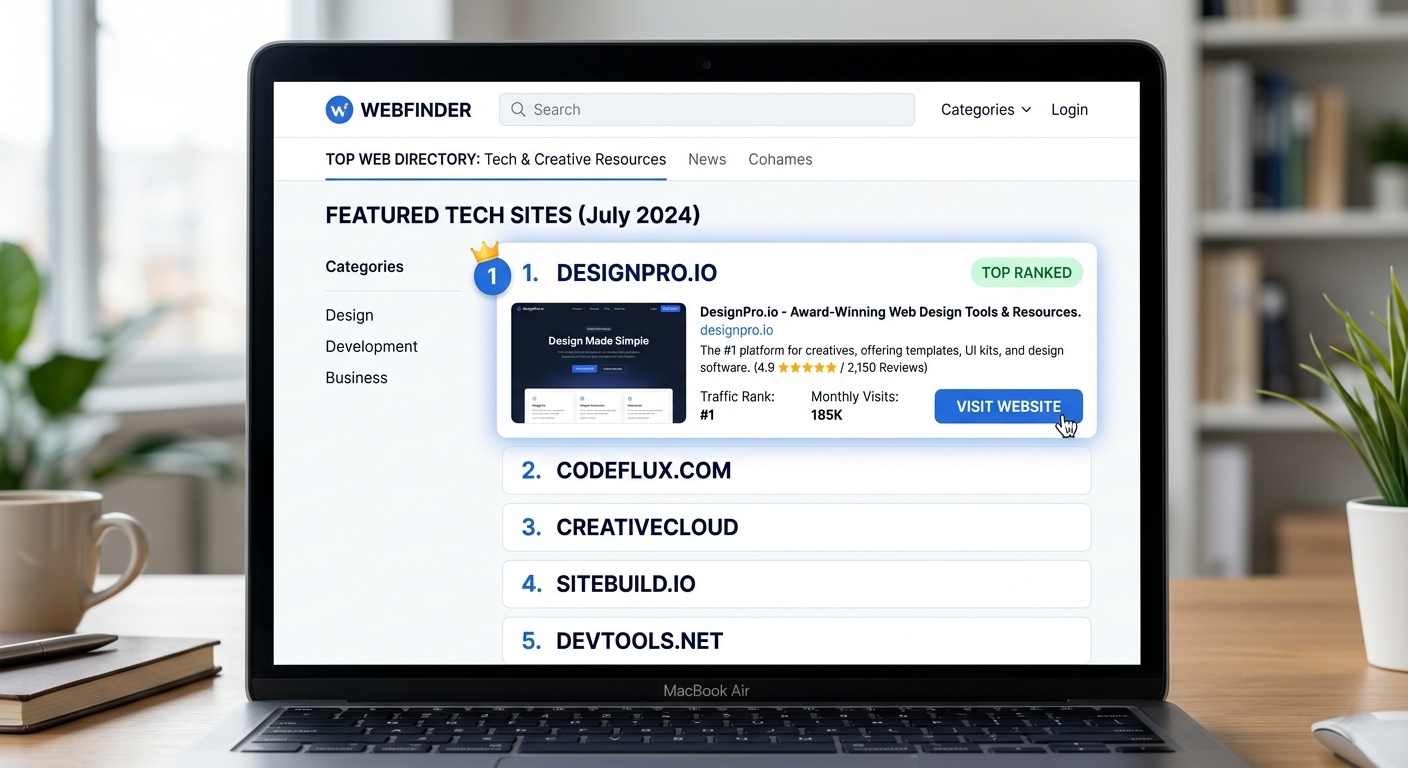
So why, when you Google “enterprise fleet management software” or “best HR platform for mid-size companies,” is a startup founded four years ago sitting in the number one spot?

Not buried on page two. Not showing up in some fringe long-tail result. They are right there at the top, taking the click that should be yours. And it is not a fluke. You keep searching your core terms, and they keep appearing. Above you. Every single time.

This is not a branding problem. It is not a content quality problem. And it is definitely not because they are smarter than you.

It is an SEO execution problem. And once you understand what is actually happening, you will see why fixing it is well within your reach.

Why Is a Smaller Competitor Outranking Us on Google?

Why Is a Smaller Competitor Outranking Us on Google

The short answer is that Google does not care how big your company is. It does not care about your revenue, your headcount, or the fact that your CEO spoke at Davos. Google cares about one thing: which page best answers the question someone just typed into a search bar.

Smaller competitors tend to be better at answering that question, and it comes down to a handful of very specific structural advantages they have over you. None of these advantages are permanent. But all of them are real right now.

Does Brand Size Actually Matter for SEO Rankings?

Brand size matters, but not in the way most executives assume. A well-known brand creates higher click-through rates when people see it in search results. It generates more branded searches, which send positive signals to Google. And it earns trust from other websites that are more likely to link to an established company.

But none of that helps you if your website is technically broken, your content does not match what people are actually searching for, and your internal processes make it impossible to move quickly.

Think of it this way. Brand authority is fuel. SEO strategy is the engine. You have a full tank of gas sitting in a car with no transmission. The smaller company has a quarter tank in a car that actually runs. They are going to get further.

How Smaller Companies Build SEO Strategies That Beat Enterprise Brands

How Smaller Companies Build SEO Strategies That Beat Enterprise Brands

Here is what that four-year-old competitor is doing that you are not. None of this is secret. None of it is revolutionary. But they are executing on all of it simultaneously while you are stuck in committee meetings debating font choices on your homepage.

They built their website recently, and it shows. Their site runs on a modern tech stack without 12 years of accumulated bloat. No legacy third-party scripts loading on every page. No committee-designed templates that try to serve 14 different stakeholder requests at once. Their Core Web Vitals scores are better than yours by default. Not because their developers are geniuses, but because they do not have the baggage you do. Google uses page speed and user experience as ranking factors. Your competitor passes those tests without even trying.

They write content the way their buyers actually search. Pull up your website right now and look at your product pages. There is a good chance they say things like “integrated workforce optimization solutions” or “end-to-end customer engagement platform.” That is how your product team talks about your product internally. It is not how anyone searches for it on Google.

Your smaller competitor’s blog says “how to reduce employee turnover in warehouses.” It says “best way to track driver hours without spreadsheets.” They are matching real search intent, word for word, and Google rewards that with rankings. Your internal jargon is invisible to search engines because nobody types it into Google.

Every page on their site has a job. Their blog posts link to pillar pages. Their pillar pages link to product pages. Their product pages have schema markup and a clear path to conversion. The entire site works like a funnel, guiding both users and search engines through a logical structure.

Your site? It is a maze. Orphaned campaign landing pages from 2019 that nobody owns. Microsites that were supposed to be temporary but never got taken down. PDFs that are indexed but lead nowhere. Blog posts that overlap and compete with each other for the same keywords. If you want to understand how to create service pages that rank and convert, you have to start by accepting that most of yours currently do neither.

They earn backlinks because they give things away. Your competitor publishes original research, free tools, templates, and calculators. A logistics company publishes a free fuel cost calculator. A recruiting firm publishes salary benchmark data. These resources get linked to by journalists, bloggers, and other websites because they are genuinely useful.

Your company, meanwhile, puts its best content behind a gated form. Nobody fills out a form to read a whitepaper anymore. That gated PDF never gets linked to, never gets shared on social media, and never builds the domain authority you need to rank. You are sitting on incredible data and expertise and locking it in a vault where Google cannot see it.

They make decisions in days. You take months. Your smaller competitor can go from identifying a keyword opportunity to publishing a fully optimized blog post in a week. Maybe less.

At your company, a single content brief needs approval from legal, brand, product marketing, and IT. Changing a meta title requires a ticket in the dev queue. Updating a landing page means coordinating across three departments and two agencies. By the time you approve a piece of content, your competitor has already published theirs, gotten it indexed, and started ranking for the term you were planning to target.

Speed is a competitive advantage in SEO, and right now, your org chart is your biggest bottleneck.

What Is Content Cannibalization and Is It Hurting Your Rankings?

Almost certainly, yes. Content cannibalization happens when multiple pages on your site compete for the same keyword. Instead of one strong page ranking well, you end up with three mediocre pages splitting authority and confusing Google about which one to show.

This is extremely common at large companies. Over the years, different teams publish content without coordinating. Your product marketing team creates a landing page for “supply chain visibility.” Your content team writes a blog post about supply chain visibility. Your solutions team builds a microsite that also covers supply chain visibility. Now Google has to choose between three of your pages, and it often chooses none of them.

Your competitor has one page targeting that term. It is thorough, well-structured, and links to all the right places on their site. Google knows exactly which page to rank. You have made Google’s job harder, and Google does not reward that.

Why Your Website Redesign Killed Your Search Rankings

If your company recently went through a website redesign and your rankings dropped, you are not imagining things. This happens constantly to large organizations, and it almost always comes down to the same mistakes.

URLs changed without proper 301 redirects. Pages that were ranking well got deleted or restructured without anyone checking their organic traffic first. The new design prioritized visual aesthetics over page speed, loading heavy images, animations, and JavaScript that tanked your Core Web Vitals. Internal linking structures that took years to build got wiped out overnight.

Most web design agencies are not SEO agencies. They build beautiful websites. They do not build websites that rank. And if nobody on your side was specifically managing SEO during the redesign, you likely lost months or years of accumulated search equity without realizing it until the traffic reports came in.

How to Fix Slow Page Speed on Enterprise Websites

Page speed is a ranking factor, and enterprise websites are almost always slower than they need to be. The culprit is rarely one big thing. It is dozens of small things that have accumulated over the years.

Third-party tracking scripts that fire on every page load. Uncompressed images that are 4MB when they should be 200KB. Legacy CSS and JavaScript files that are still loading even though the features they supported were removed two redesigns ago. Tag managers overloaded with pixels from campaigns that ended in 2021.

Fixing this requires a technical audit that goes deeper than what most web development agencies typically perform. It means cataloging every script, every image, every resource that loads on your key pages and asking whether it needs to be there. For companies serious about comprehensive SEO services, a technical cleanup is not optional. It is the foundation everything else gets built on.

Why Your Competitors Rank for Keywords You Should Own

You already have everything you need to dominate your search landscape. You have the budget. You have the brand recognition. You have customers who could provide case studies and testimonials. You have proprietary data that could fuel original research. You have subject matter experts who could be quoted in industry publications.

The problem is that none of these assets are being converted into SEO performance.

Your budget goes to paid ads instead of organic content. Your case studies sit in a sales deck instead of on a public webpage. Your data lives in internal reports that nobody outside your company ever sees. Your experts share their knowledge in gated webinars instead of in indexable blog posts.

Meanwhile, your smaller competitor takes every single asset they have and squeezes maximum SEO value from it. They do not have more. They just waste less.

SEO for Large Companies vs Small Companies

The dynamics of SEO are shifting, and this goes beyond traditional search. With AI-driven search experiences reshaping how people find answers, large companies need to think about visibility across both conventional search engines and generative engine optimization strategies. The companies that adapt to both will pull ahead. The ones that only optimize for Google as it existed five years ago will keep losing ground.

For international companies entering the North American market, the challenge is even steeper. You are not just competing against entrenched domestic players. You are trying to build domain authority from zero in a market where search behavior, content expectations, and competitive dynamics are completely different from what you are used to at home. Understanding the difference between SEO and GEO strategies is critical when you are building visibility across regions for the first time.

The good news is that large companies hold structural advantages that smaller competitors cannot replicate. You just need to start using them.

What You Should Do About It

If you have read this far and recognized your own company in every section, here is where to start.

Run a real content audit. Not a spreadsheet that lists your URLs. A page-by-page analysis that identifies which content is helping you rank, which is cannibalizing your own pages, and which is actively dragging your domain authority down. Most enterprise websites have hundreds of pages that should be consolidated, redirected, or removed entirely.

Build a keyword strategy around buyer behavior, not internal language. Stop targeting the terms your product team uses in meetings. Start targeting the phrases your potential customers actually type into Google. This requires keyword research that starts with search data, not with your brand guidelines.

Fix your technical debt. Hire someone who can audit your site architecture, your page speed, your crawl budget, and your indexation issues. Your web development agency built your site to look good. You need someone to make it perform.

Create an SEO governance model. The speed advantage smaller companies have disappears when you build internal processes that let your team move quickly. Designate clear ownership for SEO decisions. Reduce approval chains for content and technical changes. Give your marketing team the authority to publish without routing every piece through four departments.

Integrate SEO into your broader marketing services strategy. SEO does not work in a silo. It needs to connect to your content marketing, your social media, your PR, and your paid campaigns. When all channels feed into each other, the compound effect on organic visibility is significant.

The Real Opportunity

Here is the part that should actually make you optimistic. That smaller competitor beating you on Google right now? They have maxed out their advantages. They do not have your budget to invest in large-scale content production. They do not have your customer base to generate case studies. They do not have your brand authority that earns trust and clicks. They do not have your data to produce original research that earns backlinks.

They are winning because they are focused. Not because they are better resourced. And focus is something you can build.

The gap between where you are and where you should be is not a talent gap or a budget gap. It is an execution gap. And execution gaps close fast once you have the right strategy and the right team behind it. If you want to talk through what this looks like for your specific situation, book a free consultation and we will walk through exactly where you are losing ground and how to take it back.

Read More
BoostOne May 14, 2026 0 Comments

SEO vs GEO: Understanding the Difference and How They Work Together

Search visibility has changed dramatically over the last few years. Traditional Search Engine Optimization, or SEO, is still a critical part of online growth, but it is no longer the only way people discover businesses. AI-powered search experiences are now influencing how users find information, compare options, and make decisions. This shift has introduced a new layer of optimization known as Generative Engine Optimization, or GEO.

For business owners and marketing managers, understanding SEO vs GEO is not about picking one strategy over the other. It is about understanding how each works, what role each plays, and why combining them is quickly becoming essential for sustainable visibility.

This article explains SEO and GEO in detail, compares their differences, and shows how they work together to strengthen long-term digital presence.

What SEO Is and Why It Still Matters

what is seo

Search Engine Optimization is the process of improving a website so it appears more prominently in search engine results when users search for relevant topics, services, or products. SEO focuses on attracting organic traffic from people who already have intent and are actively looking for answers or solutions.

SEO remains one of the most valuable marketing channels because it targets users at the exact moment they are searching.

On-Page SEO

On-page SEO refers to everything that happens directly on your website. This includes keyword usage, page titles, meta descriptions, heading structure, internal linking, image optimization, and the overall quality of your content.

Well-executed on-page SEO helps search engines understand what each page is about while also improving readability and user experience. Pages that are clear, relevant, and easy to navigate tend to perform better both in rankings and engagement.

Off-Page SEO

Off-page SEO focuses on building authority and trust outside your website. The most important element is backlinks, which are links from other reputable websites pointing to your content.

Search engines treat backlinks as signals of credibility. The more high-quality, relevant websites that reference your content, the stronger your authority becomes. Reviews, brand mentions, and citations also contribute to off-page SEO, especially for businesses serving local markets.

Technical SEO

Technical SEO ensures that search engines can properly crawl, index, and understand your website. This includes site speed, mobile usability, secure connections, site structure, and clean indexing signals.

Without strong technical SEO, even the best content can struggle to rank. A technically sound website provides the foundation that allows all other SEO efforts to perform effectively.

Local SEO

Local SEO focuses on visibility for searches with geographic intent. It is especially important for businesses that serve specific cities or regions.

Optimizing a Google Business Profile, managing reviews, maintaining consistent business information, and targeting location-based keywords are all core elements of local SEO. When done correctly, local SEO helps businesses appear in map results and location-driven searches.

Businesses looking to strengthen their foundation can explore professional SEO services that address on-page, off-page, technical, and local optimization together in a cohesive strategy.

What GEO Is and Why It Is Becoming Essential

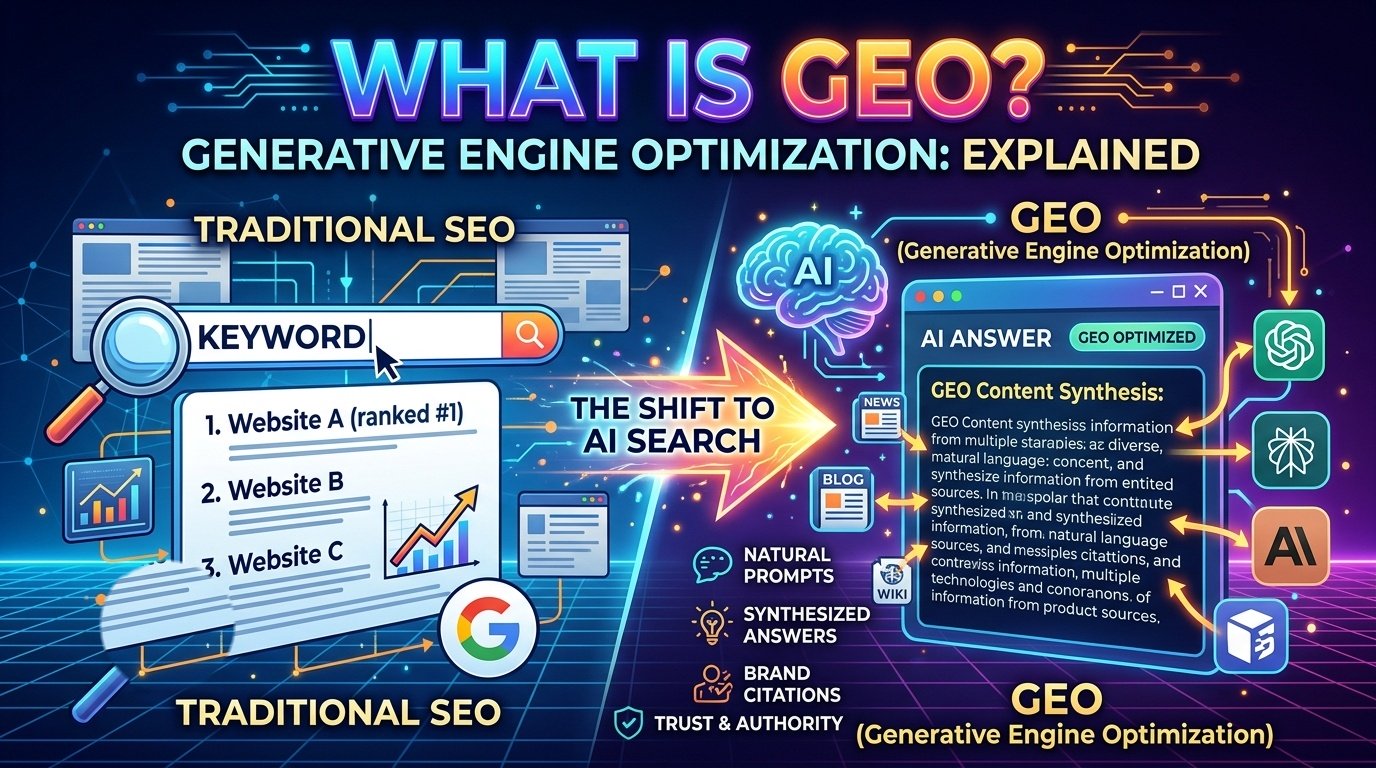
What is GEO

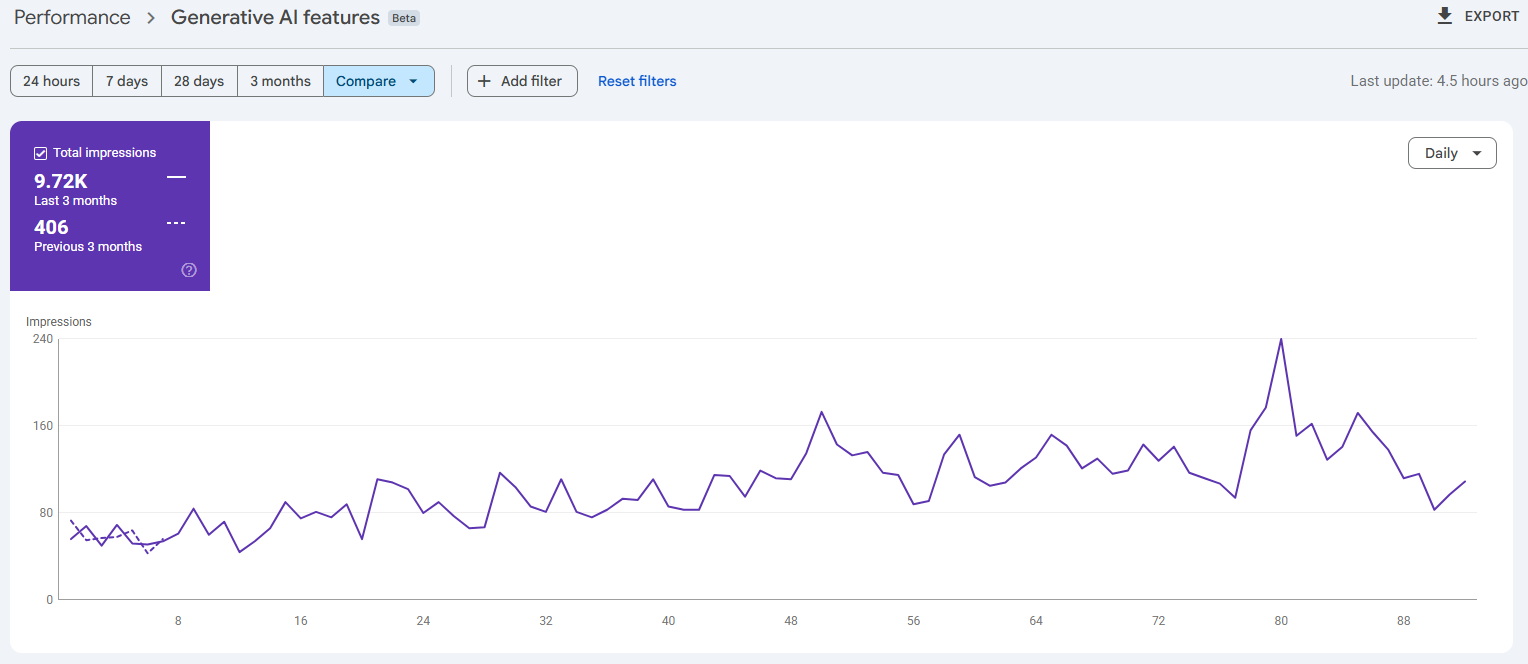
Generative Engine Optimization is the practice of optimizing content so it can be understood, trusted, and referenced by AI-powered search systems. These systems do not simply rank pages. They generate answers by pulling information from sources they consider authoritative and reliable.

GEO focuses on ensuring your content is structured and written in a way that AI systems can confidently summarize and include when responding to user queries.

How GEO Works

how GEO works

Unlike traditional SEO, GEO does not rely heavily on keyword matching alone. Instead, it emphasizes meaning, context, and clarity.

Key components of GEO include clear explanations, structured formatting, strong topical coverage, and consistent subject authority. Content written for GEO avoids fluff and focuses on answering real questions accurately and directly.

GEO also benefits from well-organized content that uses headings, lists, and natural language. This makes it easier for AI systems to interpret and reuse information correctly.

Businesses that want to stay visible as AI-driven search grows are increasingly investing in Generative Engine Optimization strategies that extend their reach beyond traditional search results.

SEO vs GEO: Understanding the Differences

GEO vs SEO

While SEO and GEO share the same goal of visibility, they operate in different ways.

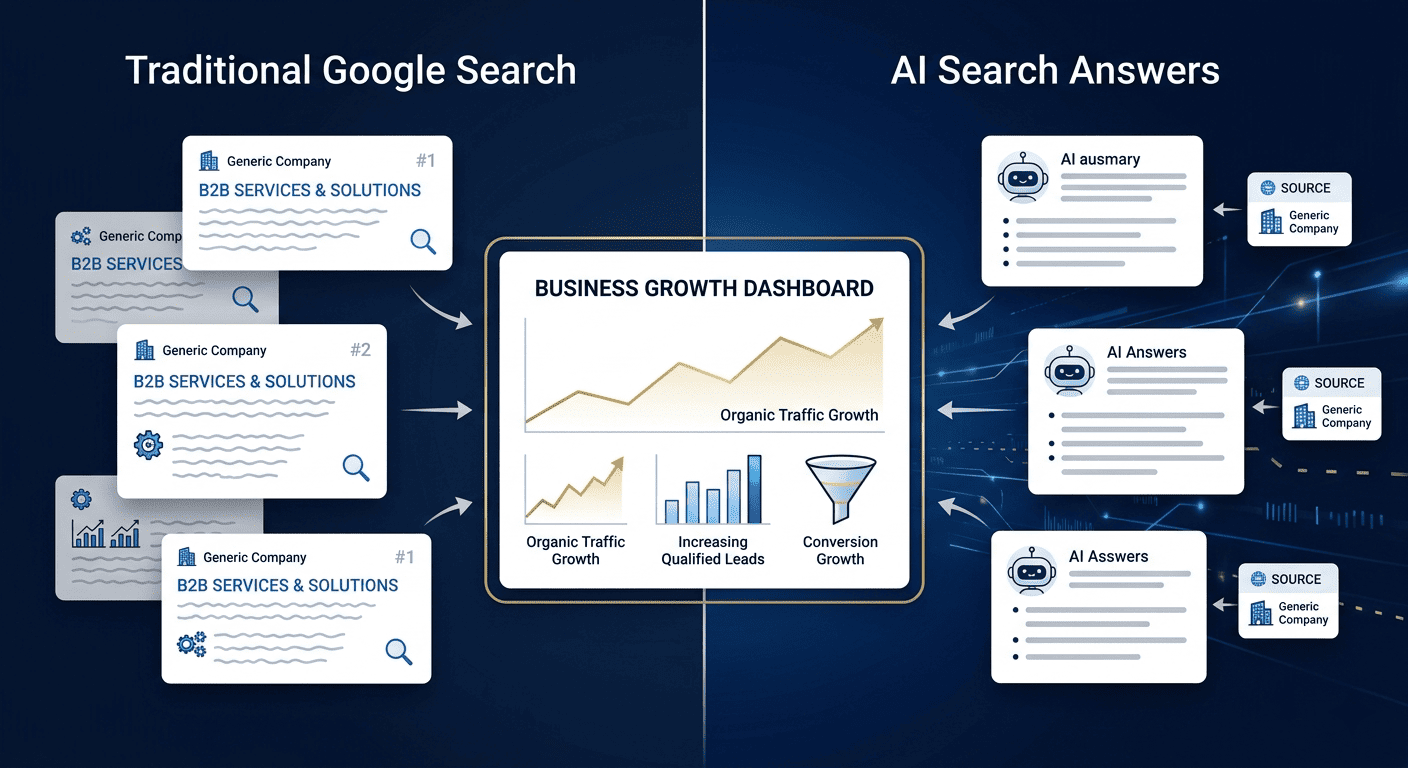
SEO focuses on ranking web pages within search engines like Google and Bing. GEO focuses on whether your brand and content are included in AI-generated answers and summaries.

SEO success is measured through rankings, traffic, and clicks. GEO success is measured through mentions, citations, and inclusion in generated responses.

SEO typically leads users to websites. GEO often provides answers without requiring a click at all. This difference makes GEO especially important as zero-click searches become more common.

Rather than competing, SEO and GEO address different layers of how users now discover information.

Why SEO and GEO Work Better Together

SEO provides the credibility and structure that GEO depends on. AI systems are far more likely to reference content that comes from authoritative, well-optimized websites.

At the same time, GEO ensures that the authority built through SEO extends into AI-powered platforms where many users now begin their research.

When SEO and GEO are aligned, businesses benefit from visibility across both traditional and emerging search experiences. Content becomes discoverable through search engines and reusable by AI systems.

SEO establishes trust. GEO amplifies that trust across new discovery channels.

Real-World Examples Across Industries

Retail and ecommerce businesses use SEO to rank product pages and category listings. GEO helps those same products appear in AI-generated buying guides and comparison summaries.

Service businesses rely on SEO to attract leads searching for specific services. GEO positions those businesses as trusted experts when users ask AI tools for recommendations.

Real estate companies use SEO to capture location-based property searches. GEO supports visibility in AI-driven relocation advice and market explanations.

Restaurants and hospitality brands use SEO to appear in local searches. GEO influences AI-powered travel planning and dining suggestions.

Healthcare organizations depend on SEO for appointment-driven searches. GEO helps ensure accurate and authoritative information is surfaced by AI systems.

Travel and tourism brands rely on SEO for destination content. GEO increases inclusion in AI-generated itineraries and trip planning responses.

Why Businesses Should Invest in GEO Now

search in AI

Most businesses are still focused entirely on traditional SEO. That creates an opportunity for early adopters.

Investing in GEO now allows brands to establish authority before competition increases. It also ensures that existing SEO content continues to deliver value as search behavior shifts.

GEO does not replace SEO. It strengthens it and extends its lifespan.

How Boost One SEO Approaches SEO and GEO Together

Boost One SEO focuses on building visibility that lasts. This means combining proven SEO fundamentals with forward-looking GEO strategies.

The approach includes strong site structure, authoritative content, clear topical focus, and formatting that supports both users and AI systems. The goal is not short-term rankings but long-term discoverability across how people search today and how they will search tomorrow.

Final Thoughts

SEO vs GEO is not a debate about which strategy is better. It is a recognition that search has evolved.

SEO remains essential for rankings, traffic, and credibility. GEO ensures that credibility carries into AI-powered discovery.

Businesses that understand and implement both are better positioned for the future of search.

Ready to Strengthen Your Search Visibility

If your business wants to improve rankings, remain visible as AI-driven search grows, and build lasting authority, combining SEO and GEO is the right move.

Learn more about SEO services designed to drive sustainable growth, and explore how Generative Engine Optimization can expand your reach into the next generation of search. A smarter strategy today creates stronger results tomorrow.

Read More
BoostOne January 20, 2026 0 Comments