How to Get Your Business Recommended by ChatGPT

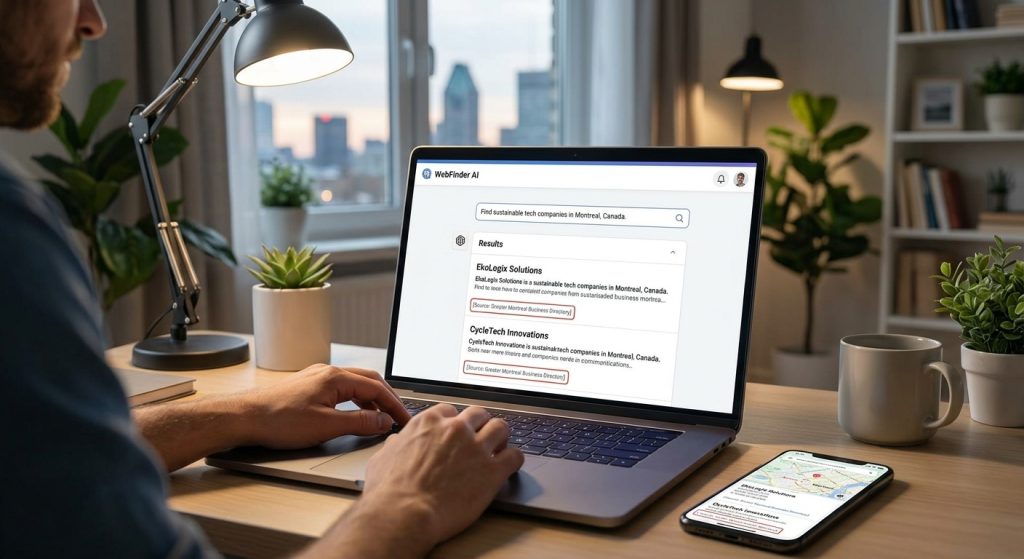
Ask ChatGPT for the best HVAC company in your town and it won’t hand you ten websites to sort through. It names two or three businesses, writes a sentence about each, and sometimes drops a map underneath. For the companies on that short list, it’s free word of mouth. For everyone else, it’s a customer who never found out they existed.
If you keep hearing about GEO and AI search and wonder what it actually takes to get your business recommended by ChatGPT, this is the practical version. Most of it needs no developer and no big budget, just a few afternoons.
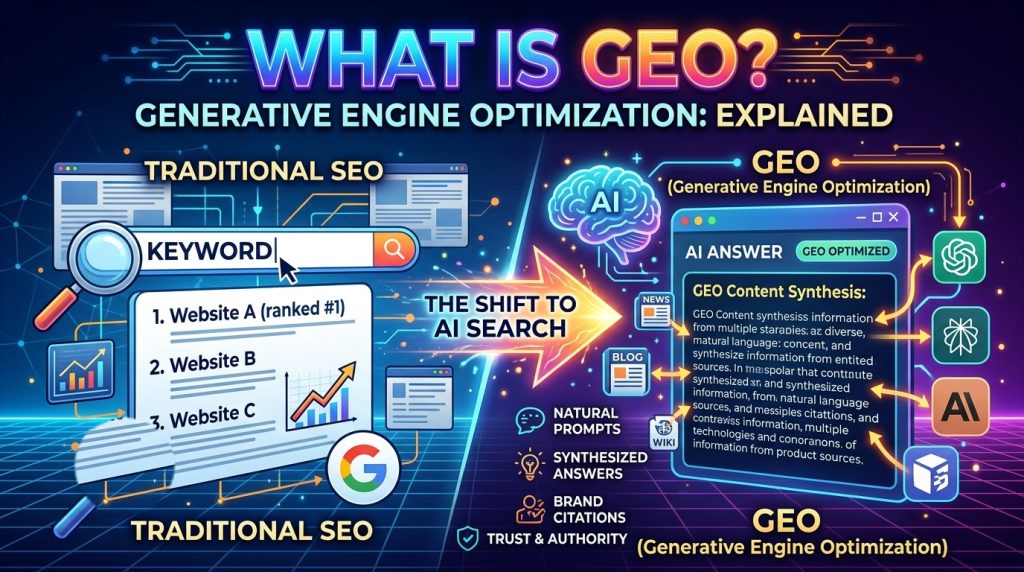
If the term itself is still fuzzy, our plain English explainer on what GEO is and how it fits with SEO covers the background. This post is about doing the work.
First, Find Out If ChatGPT Already Mentions You

Before fixing anything, get a baseline. Open ChatGPT in a temporary chat or a logged-out browser so your own history doesn’t color the results. Then ask the questions your customers would ask.
Skip “Smith Plumbing reviews.” Use real buying questions, like “who’s a reliable plumber in Columbus for an older house” or “family dentist near me that takes Delta Dental and has Saturday hours.”
Run eight or ten of these. Write down who gets named and, just as important, which websites ChatGPT cites as its sources. Those cited sites are your roadmap. If a local magazine’s “best of” list keeps appearing, you want to be on that list.
We put together a full walkthrough on how to check whether ChatGPT recommends your business, including the prompts we use with our own clients.
How ChatGPT Decides Which Business Gets Recommended
Here’s the short version. When someone asks ChatGPT a local or buying question, it usually runs a live web search, reads a handful of results, and writes an answer from what it found. For big national brands it can also lean on what it learned during training. For most small and mid-sized businesses, though, the live search is where you win or lose.
That search leans heavily on Bing. A Search Engine Land analysis of how ChatGPT handles local searches found that it pulls roughly the top 20 to 30 Bing results for a query, narrows them down, and then favors sources that are specific, easy to verify, and not locked behind a paywall. Visible ratings, hours, addresses, and clear authorship all help a source make the final cut.
So the job splits into two parts. Make your own site easy to find and quote. Then get your name onto the other sites ChatGPT already trusts.
Step 1: Make Sure ChatGPT Is Allowed to Read Your Site
Plenty of websites quietly block OpenAI’s crawler without the owner knowing.
OpenAI uses a crawler called OAI-SearchBot to find pages for ChatGPT’s search features. Its official crawler documentation says sites that opt out of that crawler won’t be shown in ChatGPT search answers. To check yours, type yourdomain.com/robots.txt into a browser and look for any line that disallows OAI-SearchBot, or a blanket rule that blocks every bot.
If you want to be found, the rule should look something like this:
User-agent: OAI-SearchBot
Allow: /
There’s a separate crawler called GPTBot that collects content for training OpenAI’s models. You can block that one and still stay visible in search, since the two settings work independently.
Also look at your security settings. Some firewall and CDN tools block AI crawlers with a single default toggle. And if your site loads most of its content through JavaScript, a crawler may see a nearly blank page. We covered that problem in our review of whether AI website builders are good for SEO.
OpenAI says robots.txt changes take about a day to register, so this is one of the fastest wins on the list.
Step 2: Get Your Website Into Bing
Most business owners have never logged into Bing Webmaster Tools. That’s fine. It takes about fifteen minutes.
Create a free account, verify your site (you can import it straight from Google Search Console), and submit your sitemap. Then search Bing for your main services in your city and see whether your pages show up at all. If they don’t, ChatGPT probably can’t find them either.
While you’re there, claim your Bing Places for Business listing. ChatGPT doesn’t read those profiles directly, but a strong local listing helps your website rank in the Bing web results that ChatGPT does pull from.
Step 3: Rewrite Your Key Pages So They’re Easy to Quote

ChatGPT builds its answers out of short passages. If the answer to a customer’s question sits in the fourth paragraph of your service page, under a story about how your grandfather started the company, it gets skipped.
Start with your homepage and your top three to five service pages.
Put the direct answer near the top. Say what you do, who you do it for, and where, in plain words, within the first two sentences.
Use the words customers use. “Water heater replacement in Plano” beats “Comprehensive Thermal Solutions” every single time.
Add details only you can give. Price ranges, typical timelines, brands you install, warranty terms, the neighborhoods you cover. Generic copy sounds like every competitor. The specific details are what get quoted.
Add a short FAQ built from the questions people actually ask when they call.
Add LocalBusiness schema markup so your name, address, hours, and service area are spelled out in a format machines can read without guessing. Most SEO plugins handle this for you.
Step 4: Get Mentioned on the Sites ChatGPT Trusts
Your website is only half of it. When ChatGPT is choosing between two similar companies, the one that shows up across more trusted sites usually gets the nod.
Start with the sources from your baseline test, then work through these.
Review platforms come first. Google, Yelp, Facebook, plus whatever carries weight in your field, like Houzz for contractors or Healthgrades for medical practices. Steady reviews matter more than a sudden burst, and replying to them shows you’re active.
Local “best of” roundups and city guides often accept nominations. Some are pay to play, so ask before you spend anything.
Your chamber of commerce, the BBB, and trade association directories are easy listings that carry real credibility.
Local news coverage counts too. Sponsoring a community event or offering expert comment on a local story both tend to produce mentions.
Reddit and community forums work when you show up as a real person answering questions. Dropping links and running gets you ignored or banned.
Step 5: Keep Your Business Details Identical Everywhere
ChatGPT has to connect your website, your Yelp page, your Google profile, and that mention in the local paper. If your name, address, and phone number appear three different ways, it gets less sure they belong to the same company.
Pick one exact version and use it everywhere. Old addresses and dead phone numbers sitting in forgotten directory listings are worth tracking down and correcting.
Step 6: Publish Content That Answers Buying Questions
The questions that lead to recommendations tend to be specific. Costs, comparisons, “is it worth it,” “how do I choose.” A page that genuinely answers one of those becomes a way in.
Write the article your best salesperson would write if they had a free afternoon. “How much does a roof replacement cost in Tampa” or “tankless vs. tank water heaters for a family of four.” Use real numbers from your own jobs. One honest, detailed page will do more than ten thin ones.
Don’t Put All Your Eggs in the ChatGPT Basket
ChatGPT gets the headlines, but it’s one platform. Your customers also use Google’s AI Overviews, Perplexity, Gemini, and plain old Google Maps. Nearly everything above helps on all of them, because they reward the same things. If you need to prioritize, our breakdown of which AI search platforms actually send customers is a good place to start.
And don’t abandon SEO to chase AI. A site that ranks well in regular search has a far easier time getting picked up by AI tools, since they’re reading search results too. We saw that clearly in our SEO case study for renovation companies, where strong search fundamentals did most of the heavy lifting.
How Long It Takes and How to Tell It’s Working
A robots.txt fix can register within a day. Bing indexing usually takes a few weeks. Reviews, mentions, and content are the slower build, often a few months before you see a consistent change.
Track it three ways. Rerun your baseline questions once a month and note who gets named. Check your analytics for referral traffic from chatgpt.com. And add “ChatGPT or another AI tool” to your “how did you hear about us” question, on forms and on the phone. It’s as low tech as it gets, and often the most telling.
Want Help Getting It Done?
You can handle all of this in house at a basic level, and that alone puts you ahead of most local competitors. If you’d rather hand it off, our generative engine optimization services cover the full process, and they plug into the rest of our SEO, Google Ads, and digital marketing services.
Not sure where you stand right now? Book a call and we’ll run your business through ChatGPT live and show you exactly what it says.