geo Archives | Boost One SEO

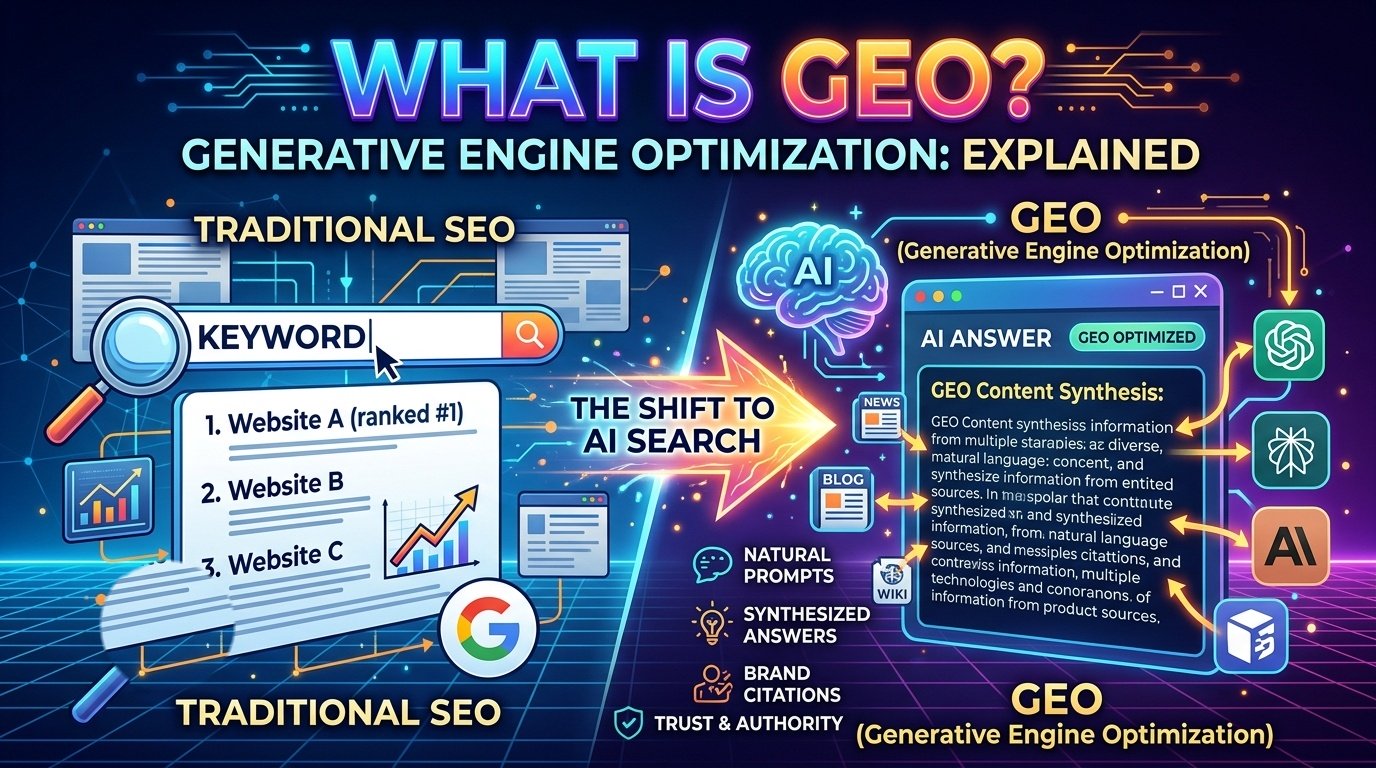
What Is GEO (Generative Engine Optimization)?

Somebody at a networking breakfast mentions that their competitor keeps showing up in ChatGPT. Then a cold email lands in your inbox selling “AI search optimization” for a suspiciously round monthly fee. Then your marketing person says GEO in a meeting, short for generative engine optimization, and everyone nods along like they’ve known what it meant for years.

So let’s clear it up.

What Is GEO in Plain English?

ai search for business

GEO stands for Generative Engine Optimization. It’s the work of getting your business named, quoted, and recommended inside the answers that AI tools write for people.

When someone types “who does bathroom remodels near me” into ChatGPT and gets back a short paragraph naming three companies, GEO is the reason one of those companies is in there and the others aren’t.

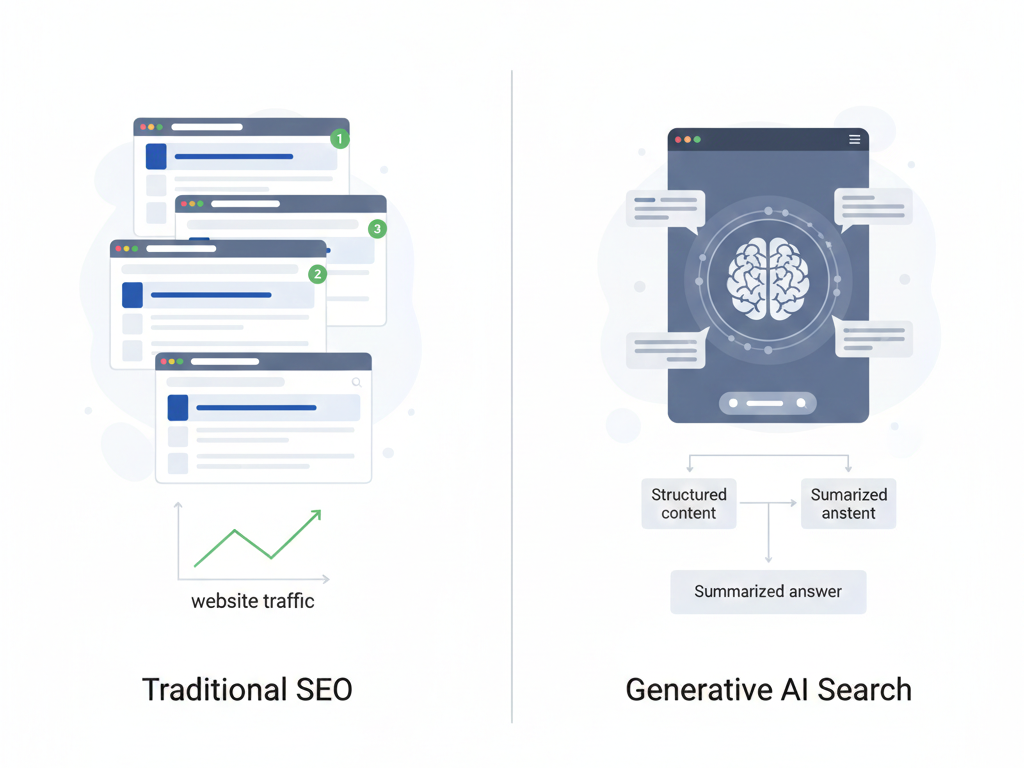
Traditional SEO earns you a spot on a page of links. GEO earns you a spot inside a sentence the AI writes. Same goal, which is getting in front of a person with a problem and a credit card. Different surface.

The term itself came out of a research paper published in late 2023 by academics from Princeton, Georgia Tech, the Allen Institute for AI, and IIT Delhi. They tested thousands of queries and found that specific content choices could measurably change whether a source got pulled into an AI-generated answer. You can read the original GEO paper on arXiv if you want the technical version. The short takeaway is that this isn’t guesswork invented by marketers. There’s real research underneath it.

A “Generative Engine” Is Just a Search Tool That Answers Instead of Lists

ai search giving an answer

That phrase throws people. A generative engine is any tool that reads a question, pulls information from across the web, and writes an answer in its own words. ChatGPT. Perplexity. Google’s AI Overviews and AI Mode. Claude. Copilot. Gemini.

The behavior change matters more than the technology. Ten years ago a homeowner with a leaky roof typed “roofers Tampa” and got ten links to sort through. Today that same homeowner types something closer to “I have a tile roof from the 90s with a leak near the chimney, who should I call in Tampa and what should this cost.” And the tool hands back a written answer with two or three companies named in it.

They may never scroll. They may never see a search results page at all.

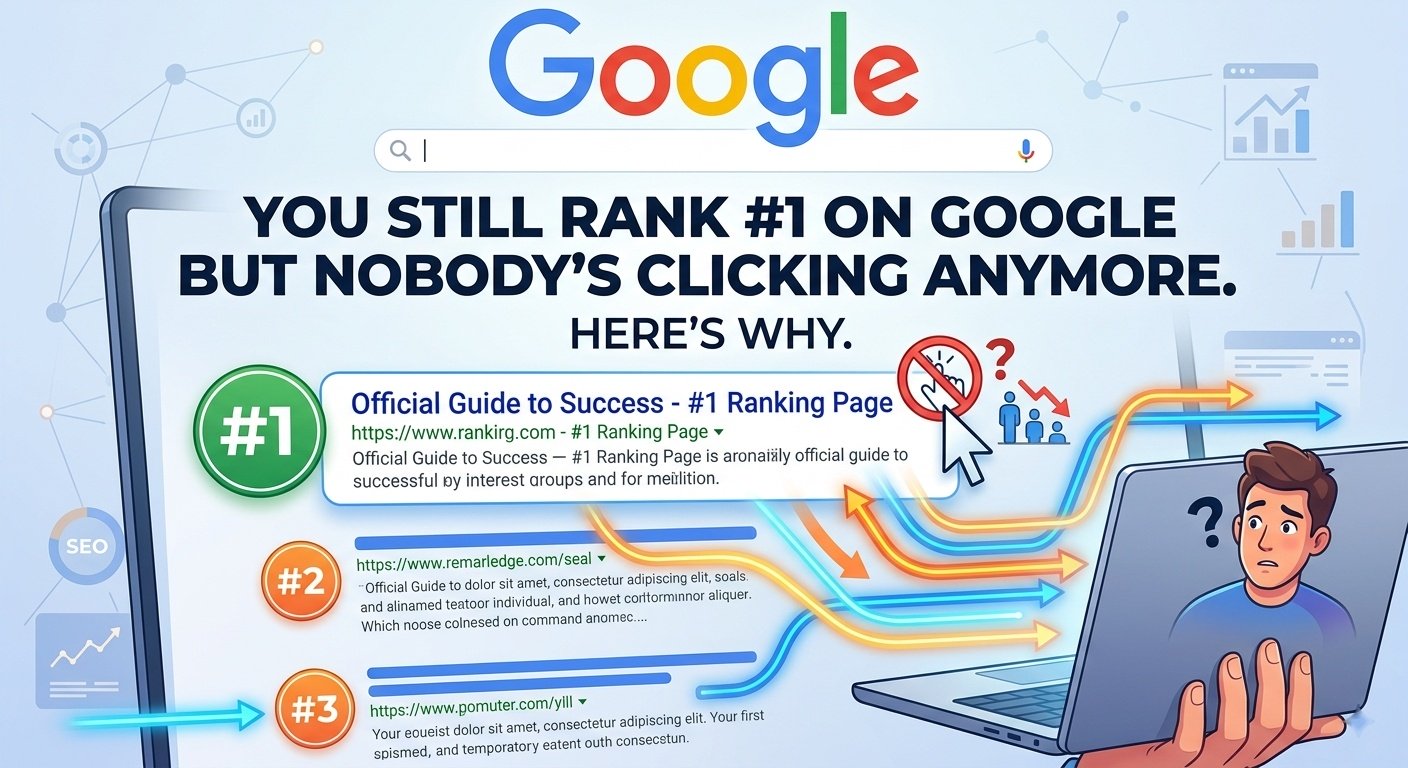
This is why so many business owners feel like something broke. Their rankings look fine in the reports but the phone is quieter. We wrote a whole piece on that specific frustration, ranking number one but getting no clicks, because it’s become one of the most common complaints we hear.

Does GEO Replace SEO? Google Answered That Directly
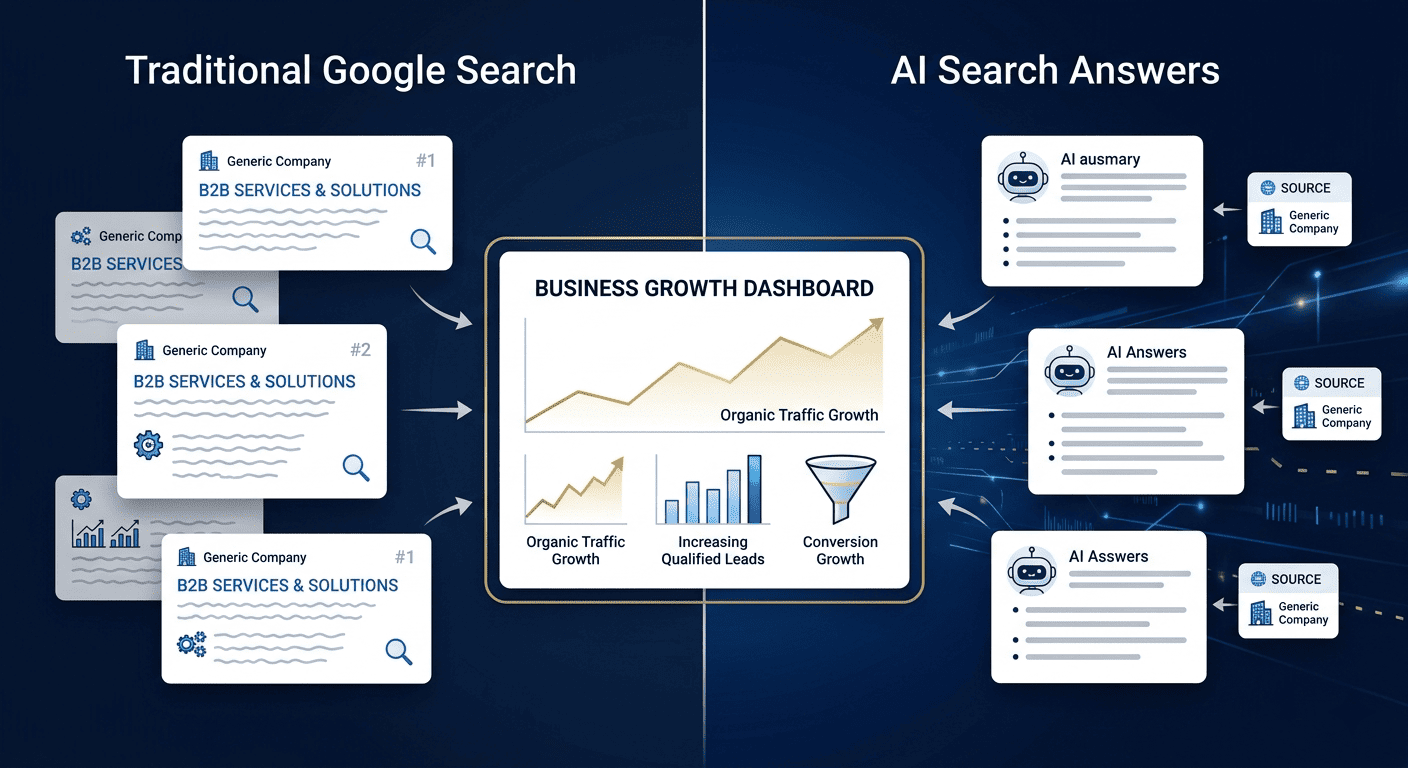
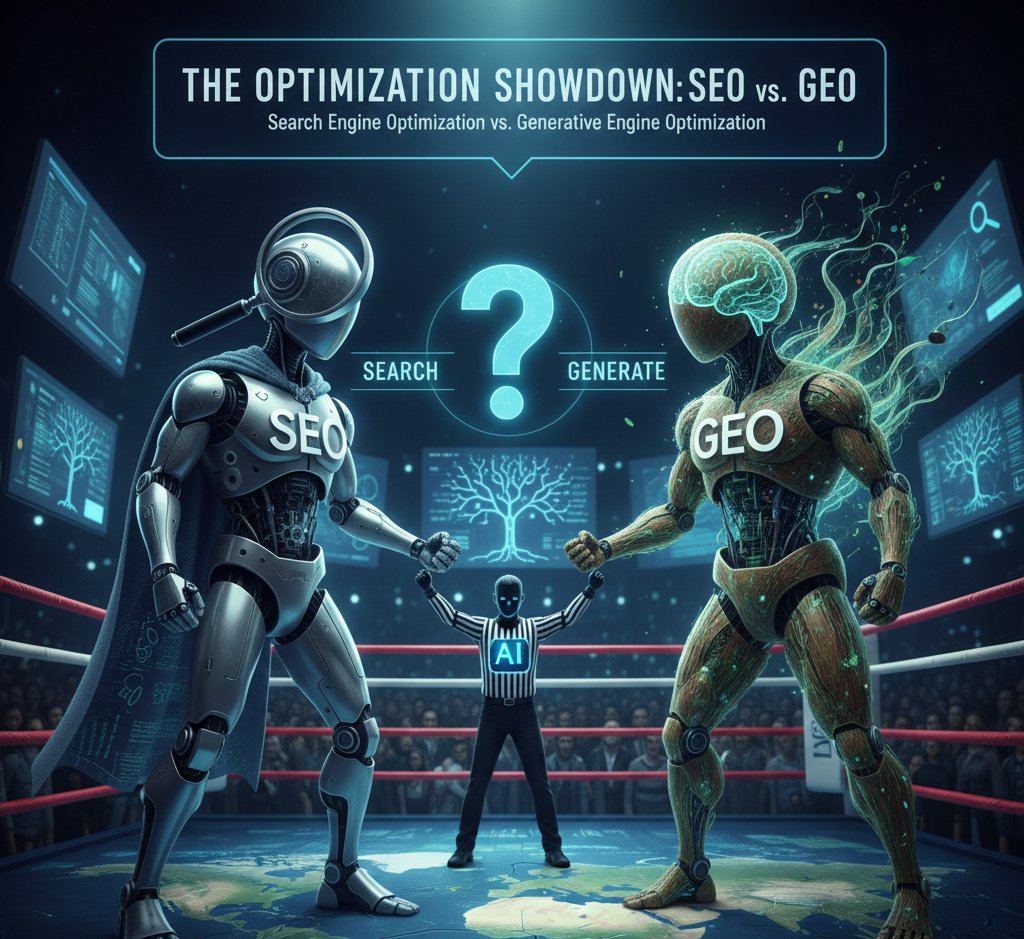
seo vs geo search

No. And you don’t have to take my word for it.

In May 2026, Google published official guidance for website owners on how to show up in its generative AI features. When the documentation asks whether SEO is still relevant for AI search, the answer Google gives is “In short, yes!” The company explains that its AI features run on the same core Search ranking and quality systems, using retrieval to pull pages from the same index that powers regular results.

Read that again, because it settles a lot of arguments. The AI answer is built from pages the search engine already retrieved and already trusted. If your site can’t earn a normal ranking, it isn’t in the pool the AI is drawing from in the first place.

That’s the whole relationship in one sentence. SEO gets you into the room. GEO gets you quoted once you’re in it.

Anyone selling you GEO as a replacement for search engine optimization is either confused or hoping you are. You can look at Google’s own guidance on optimizing for generative AI features yourself.

Where SEO and GEO Overlap, and Where They Split

ai sites vs seo strategy

Most of the foundation is shared. A site that loads fast, gets crawled cleanly, and covers topics thoroughly does well in both worlds. Reviews, citations, consistent business information across the web, and genuine authority in your subject all feed both systems.

The differences show up in how content gets written and where your name appears off your own site.

Search engines reward pages that rank. Generative engines reward passages that are easy to lift and reuse. If your service page buries the answer under four paragraphs of company history, a crawler can still index it, but an AI trying to build a two-sentence answer will skip past you and quote the competitor who stated it plainly in the opening line.

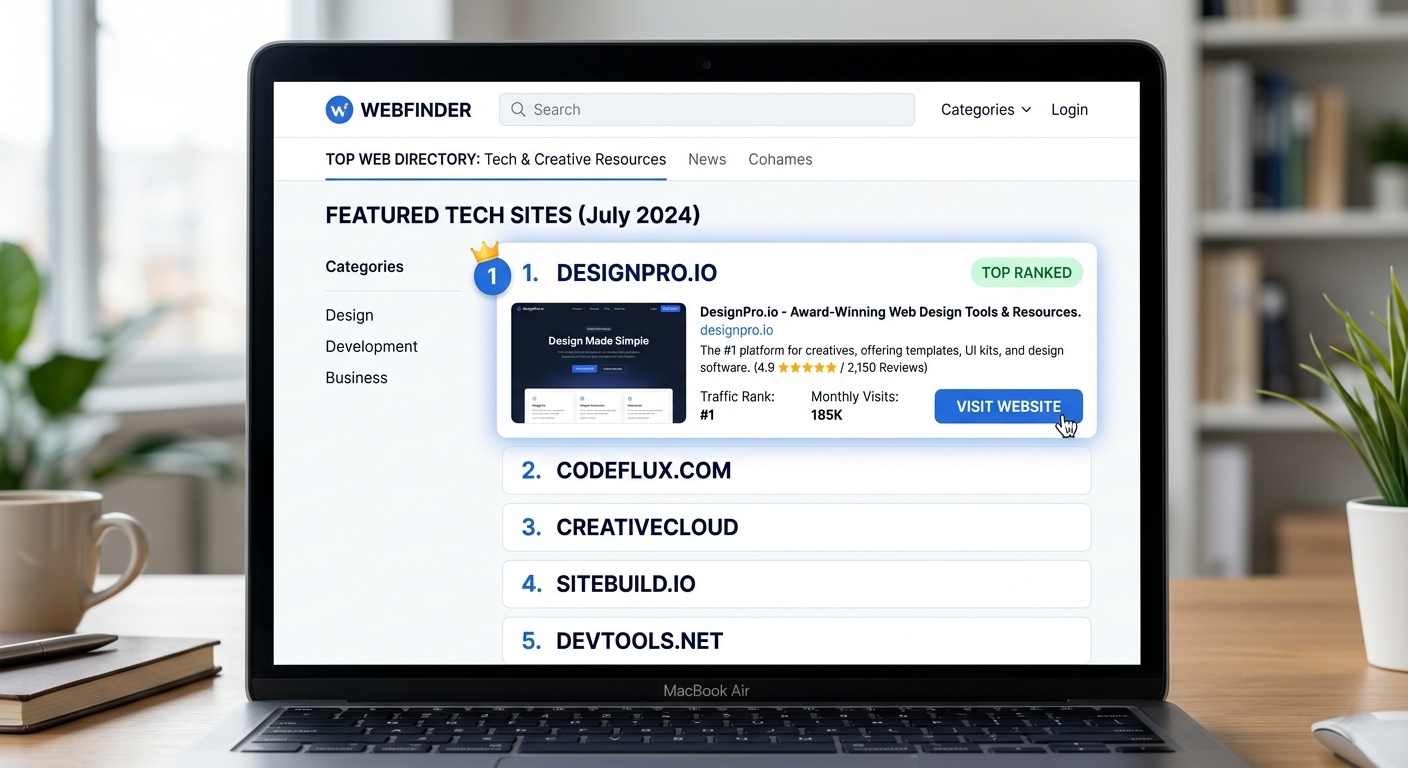
The other big split is third-party mentions. AI tools lean hard on roundups, comparison articles, forums, and local list posts when they build recommendations. That’s why “best in town” style pages carry so much weight now. We broke down how those work in our piece on best-in-town lists and where AI citations come from.

Be the Answer Wherever Your Customer Is Searching

AI Search Optimization agency

Here’s the part I’d underline if this were a printed page.

Your customers are not all searching in one place anymore. One asks Google. One asks ChatGPT. One asks Perplexity because a coworker recommended it. One opens Maps and never types a word into a search bar. A younger one searches TikTok. Plenty of people use two or three of these in a single afternoon while deciding who to call.

Picking a side in the SEO versus GEO debate means voluntarily going missing from wherever you didn’t pick. That’s the actual risk, and it has nothing to do with which technology wins.

The goal isn’t to rank. The goal is to be the answer, on every surface where a buyer is asking. Some of those surfaces send more qualified leads than others, and the mix shifts by industry, which is why we looked at which AI search platform actually sends customers rather than just which one gets the most press.

What Actually Gets a Business Cited in AI Answers
local directories

Practical stuff you can act on this week:

Answer the question in the first two sentences of the section. Put the direct answer up top, then explain. This single habit does more for AI visibility than most technical fixes.

Write the way customers ask. Real questions, real phrasing. “How much does a kitchen remodel cost in Sarasota” beats “Our Kitchen Remodeling Solutions” every time.

Include specifics only you have. Prices, timelines, materials, warranty terms, service areas, actual project details. Generic content gets skipped because five hundred other sites say the same thing. Original detail gets quoted.

Get named on sites that already have authority. Local publications, industry directories, supplier pages, chamber listings, genuine review platforms, relevant Reddit threads. AI models cite sources they encounter repeatedly across the web.

Keep your name, address, phone, and service description identical everywhere. Inconsistency makes it harder for a model to confidently connect the dots and decide you’re a real, trustworthy entity.

Use structured data so machines can read your business details without guessing.

Curious whether any of this is landing for you right now? Start by checking whether ChatGPT recommends your business for the questions your customers actually ask.

The Foundation Problem Nobody Wants to Hear About
lovable vs wordpress seo

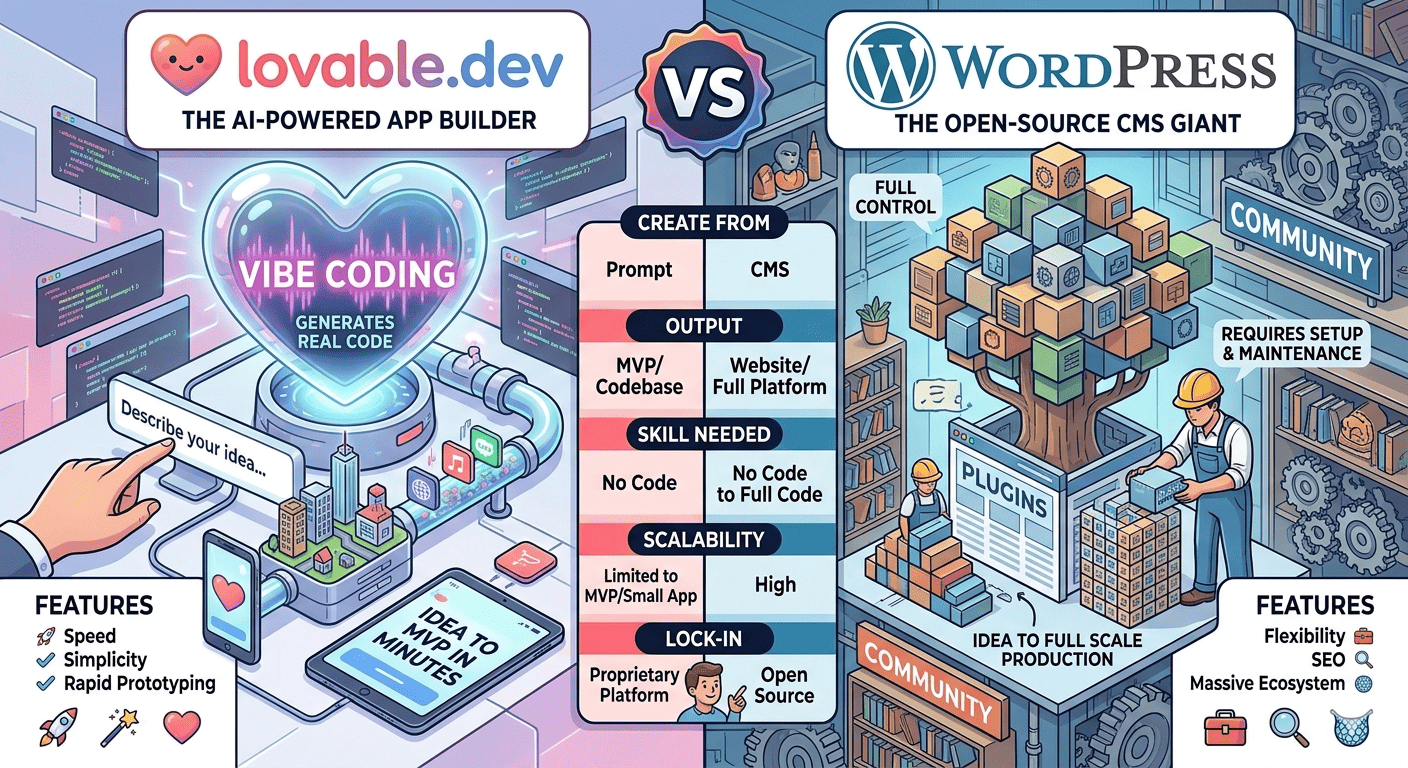
A fair number of small business sites can’t compete on either front because of what they’re built on. Thin pages, duplicated template copy, slow load times, no real structure. That gets worse when the site was spun up in an afternoon by a tool that promised instant results. We tested that assumption in our look at whether AI website builders are good for SEO, and the results were mixed at best.

If your foundation is shaky, fix it before spending a dollar on anything labeled GEO. There’s no shortcut around it.

How to Tell If It’s Working
aisearchstatsrenocompany

Rankings alone won’t tell you anymore. Watch these instead:

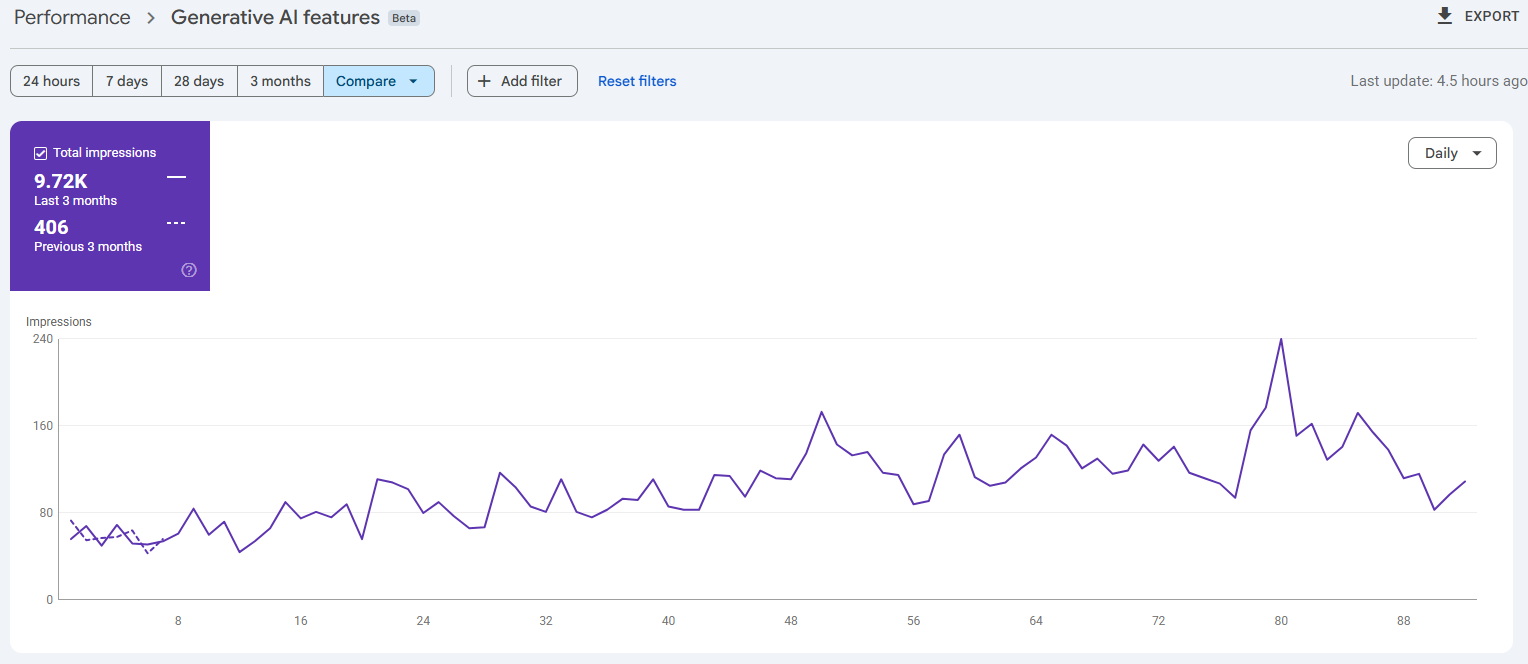
Referral traffic from AI domains in your analytics, things like chatgpt.com and perplexity.ai. Google Search Console now includes reporting on generative AI performance. Branded search volume, since people who find you in an AI answer often go look you up by name afterward. And plain old prompt testing, where you ask the same buying questions your customers ask and see who gets named.

Also watch lead quality. AI-referred visitors tend to arrive further along in their decision, because the tool already did the comparison shopping for them. Fewer visits, better conversations. We saw that pattern clearly in our case study on SEO for renovation companies.

Where to Go From Here

If you take one thing away, make it this: GEO is not a new industry that replaced the old one. It’s an expansion of the same job, which has always been making sure that when someone needs what you sell, you’re the name in front of them.

Audit what you have. Fix the technical basics. Rewrite your key pages so they answer real questions directly. Build mentions on sites that already carry weight in your market. Then measure across every channel, not just one.

If you’d rather have someone handle the whole thing, that’s what our generative engine optimization services are built for, and they fold into the broader digital marketing services we run for local and national businesses. Want to know where you currently stand in AI search? Book a call and we’ll show you what the engines are saying about your business right now.

Read More
BoostOne September 4, 2026 0 Comments

You Still Rank #1 on Google But Nobody’s Clicking Anymore. Here’s Why.

You check your rankings the way you always have. Position one, same as last quarter, same as the quarter before that. Then you open your analytics and the traffic line has been sloping down for months. Form fills are thinner. The phone rings less often. No penalty email arrived, nothing broke, and your competitors have not leapfrogged you.

So what changed?

Ranking #1 but no clicks to show for it has become one of the most common complaints we hear from business owners, and the cause is almost never the thing they suspect. Your ranking did not slip. Everything around your ranking moved.

Ranking #1 but no clicks: position one now sits under the answer

position one now sits under the answer

The results page your customers see today looks nothing like the one you optimized for three years ago. Google’s AI Overview sits at the top, answers the question in a paragraph, and pushes the first organic link down past the fold on most screens. Research from Whitespark in 2026 found AI Overviews appearing on roughly 68% of local business queries, well ahead of the traditional local pack.

The effect on clicks has been measured repeatedly, by different companies using different methods, and they all point the same direction. Ahrefs data from December 2025 found the top ranking result loses about 58% of its click-through rate when an AI Overview is present, up from 34.5% in April 2025. Pew Research tracked real browsing behavior and found that only 8% of users clicked a traditional result when an AI summary appeared, compared to 15% when it did not. SparkToro’s 2026 research put the wider picture at 68% of US searches ending with no click to any website at all.

That is the fingerprint most business owners are seeing without recognizing it. Open Google Search Console and compare the last twelve months. If impressions are flat or climbing while clicks fall, you have not lost visibility. You have lost the click that visibility used to guarantee.

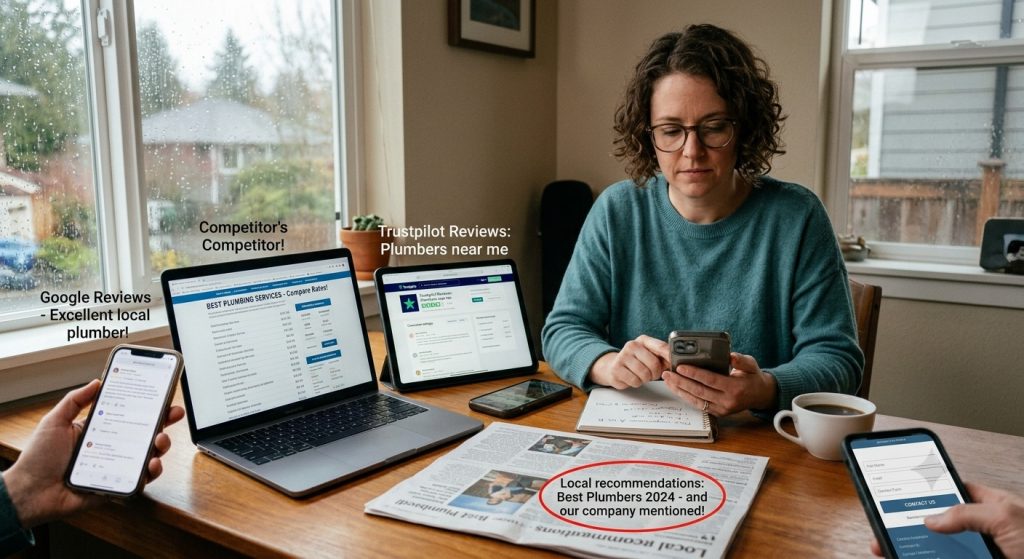
Your customer is checking four places before they contact you

Your customer is checking four places

The other half of the story has nothing to do with Google.

BrightLocal’s 2026 Local Consumer Review Survey found that 45% of consumers had used ChatGPT, Gemini, or Perplexity to find a local business in the previous year. The same survey put that figure at 6% a year earlier. Generative AI is now the third most common way people look for a local business, ahead of Yelp and Tripadvisor. Google is still first, but it dropped 12 percentage points in a single year.

Then there is everything else. Someone researching a service provider might watch a YouTube comparison, read a Reddit thread from two years ago, search TikTok for a walkthrough, check Instagram to see whether the business looks real, and ask an AI assistant to shortlist three options. Adobe Express research from early 2026 found 49% of US consumers had used TikTok as a search engine at some point.

Your prospect is doing all of that before they ever type your business name into Google. By the time they land on your homepage, they have already formed an opinion. Some of them never land on it at all, because they got everything they needed somewhere you were not mentioned.

Ranking is a position. Being the answer is a different job.

Ranking is a position

Here is the part that catches people off guard. Ranking first does not mean you get cited.

An analysis by Omniscient Digital of more than 23,000 AI citations found that roughly 77% of the sources referenced in AI answers about a brand were off-page. Directories, review platforms, forums, third-party articles, video. Not the brand’s own website. AI systems are assembling a picture of you from what other people say, then presenting that picture as the answer.

This is why generative engine optimization has become its own discipline rather than a footnote in an SEO plan. Traditional SEO earns you a position in a list. GEO earns you a place inside the answer, which is a different set of signals: how clearly your site defines what you do and who you serve, how consistently your business details appear across the web, how often independent sources mention you, and how easy your content is for a machine to lift a clean answer out of.

The two are not in competition. If you want the practical breakdown of where they overlap and where they diverge, we covered it in detail in our guide to the difference between SEO and GEO.

Why the leads you do get feel different

Why the leads you do get feel different

Business owners often tell us the drop in volume came with a change in quality, and usually in both directions.

Fewer people arrive at the top of the funnel, because the AI answer handled the “what is” and “how much does it cost” questions that used to bring you informational traffic. What remains is later stage. People who show up now have often compared three providers already and are close to a decision. Seer Interactive’s tracking found AI search visitors convert at meaningfully higher rates than the average organic visitor, which matches what we see in client accounts.

The uncomfortable side of that is your top of funnel content is now doing invisible work. It gets read by a model, summarized, and delivered without a visit. You are still influencing the decision. You just cannot see it in a traffic report, which is why branded search volume, direct traffic, and phone calls have become better health indicators than sessions.

Run this check before you change anything

Five things you can do yourself this week, no tools required beyond what you already have.

Pull a twelve month impressions versus clicks comparison in Search Console. Note which queries lost clicks while holding position.

Take your ten most commercially valuable keywords and search them manually, logged out. Does an AI Overview appear? Are you named inside it, or only below it?

Ask ChatGPT, Gemini, and Perplexity the questions your customers actually ask. “Best [your service] in [your city].” “Who should I hire for X.” Write down which businesses get named and where those answers appear to be sourced from.

Open GA4 and filter referral traffic for chatgpt.com, perplexity.ai, gemini.google.com, and copilot.microsoft.com. Small numbers here are normal. Zero is a warning sign.

Search your own business name and read what comes back on page one. That set of pages is roughly what an AI model sees when it decides whether to recommend you.

What actually moves the needle now

Answer the question in the first fifty words of the page. Models and skim readers both reward a direct response near the top, followed by the detail underneath. Burying your answer under four hundred words of preamble costs you both.

Be specific enough to be quotable. Prices, timeframes, numbers, named locations, dated information. Vague content gets paraphrased into nothing. Concrete content gets cited with your name attached.

Build mentions off your own site. Reviews on Google and industry platforms, accurate listings, guest articles, podcast appearances, a YouTube channel that answers the same questions your service pages do. Since most AI citations come from third-party sources, this is the highest leverage work available to most businesses right now.

Keep the technical base solid. None of the above works if a crawler cannot read your pages cleanly, if your site takes six seconds to load, or if your service pages are one long block of undifferentiated text. This is where our SEO services still do the heavy lifting, because AI answers are built from indexed pages and an unindexable site cannot be quoted. If your site was put together on a drag and drop platform, it is worth reading our breakdown of whether AI website builders are good for SEO before you spend money on content that sits on a shaky foundation.

Do not abandon what is working

There is a temptation to conclude that SEO is finished and start over. That would be a mistake.

Google still handles the largest share of searches by a wide margin, and AI Overviews are assembled largely from pages that already rank. Seer Interactive found that a page cited inside an AI Overview earned around 2.1% CTR, while an uncited page on the same results page earned about 0.9%. Ranking is no longer the finish line, but it is still the entry ticket.

The shift is in the goal. You are no longer trying to own a position on one page. You are trying to be the answer wherever your customer happens to be asking, whether that is Google, an AI assistant, YouTube, a review platform, or a Reddit thread you did not know existed.

Find out where you actually stand

Most businesses in this position do not need a rebuild. They need to know which queries are losing clicks, whether AI tools currently recommend them, and which two or three fixes will recover the most ground.

That is exactly what we look at in a free consultation. We will run your site and your key queries through both traditional and AI search, show you where you are visible, where you are missing, and what it would take to close the gap.

Book your free consultation and let’s find out what your customers are seeing when they look for a business like yours.

Read More
BoostOne August 18, 2026 0 Comments

SEO vs GEO: Understanding the Difference and How They Work Together

Search visibility has changed dramatically over the last few years. Traditional Search Engine Optimization, or SEO, is still a critical part of online growth, but it is no longer the only way people discover businesses. AI-powered search experiences are now influencing how users find information, compare options, and make decisions. This shift has introduced a new layer of optimization known as Generative Engine Optimization, or GEO.

For business owners and marketing managers, understanding SEO vs GEO is not about picking one strategy over the other. It is about understanding how each works, what role each plays, and why combining them is quickly becoming essential for sustainable visibility.

This article explains SEO and GEO in detail, compares their differences, and shows how they work together to strengthen long-term digital presence.

What SEO Is and Why It Still Matters

what is seo

Search Engine Optimization is the process of improving a website so it appears more prominently in search engine results when users search for relevant topics, services, or products. SEO focuses on attracting organic traffic from people who already have intent and are actively looking for answers or solutions.

SEO remains one of the most valuable marketing channels because it targets users at the exact moment they are searching.

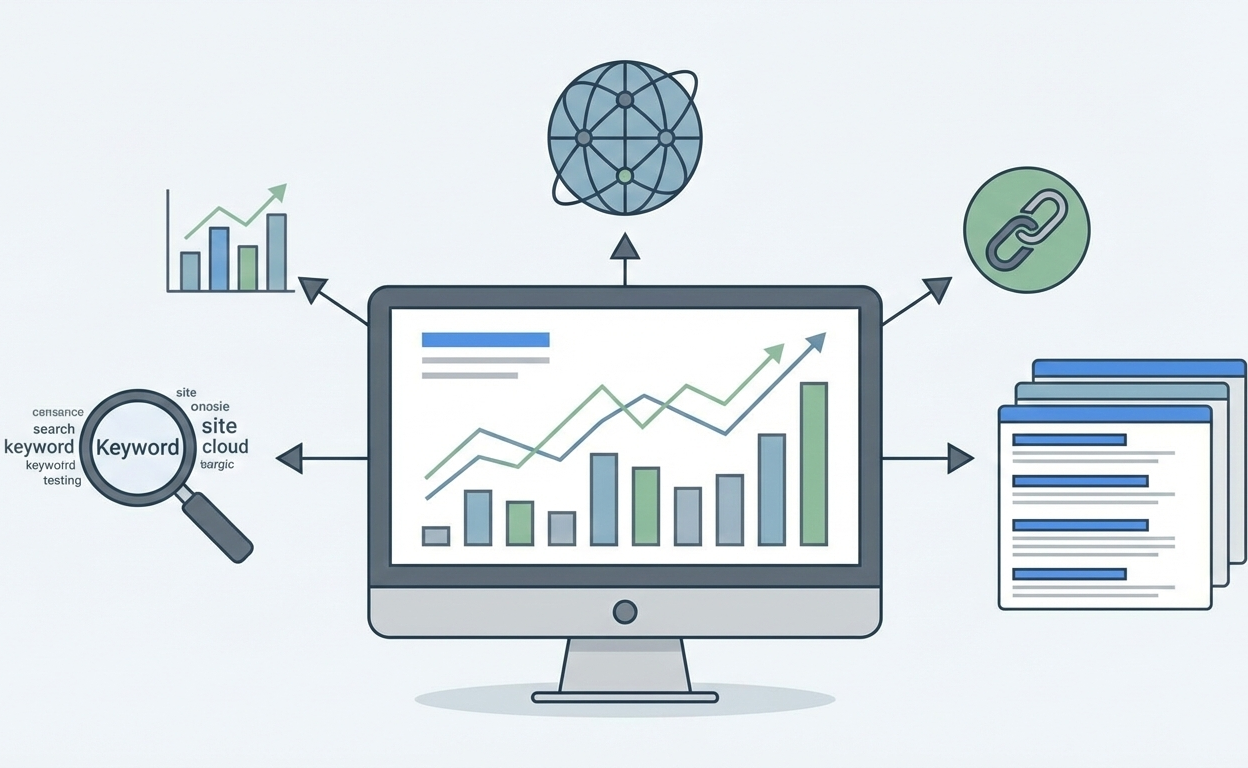
On-Page SEO

On-page SEO refers to everything that happens directly on your website. This includes keyword usage, page titles, meta descriptions, heading structure, internal linking, image optimization, and the overall quality of your content.

Well-executed on-page SEO helps search engines understand what each page is about while also improving readability and user experience. Pages that are clear, relevant, and easy to navigate tend to perform better both in rankings and engagement.

Off-Page SEO

Off-page SEO focuses on building authority and trust outside your website. The most important element is backlinks, which are links from other reputable websites pointing to your content.

Search engines treat backlinks as signals of credibility. The more high-quality, relevant websites that reference your content, the stronger your authority becomes. Reviews, brand mentions, and citations also contribute to off-page SEO, especially for businesses serving local markets.

Technical SEO

Technical SEO ensures that search engines can properly crawl, index, and understand your website. This includes site speed, mobile usability, secure connections, site structure, and clean indexing signals.

Without strong technical SEO, even the best content can struggle to rank. A technically sound website provides the foundation that allows all other SEO efforts to perform effectively.

Local SEO

Local SEO focuses on visibility for searches with geographic intent. It is especially important for businesses that serve specific cities or regions.

Optimizing a Google Business Profile, managing reviews, maintaining consistent business information, and targeting location-based keywords are all core elements of local SEO. When done correctly, local SEO helps businesses appear in map results and location-driven searches.

Businesses looking to strengthen their foundation can explore professional SEO services that address on-page, off-page, technical, and local optimization together in a cohesive strategy.

What GEO Is and Why It Is Becoming Essential

What is GEO

Generative Engine Optimization is the practice of optimizing content so it can be understood, trusted, and referenced by AI-powered search systems. These systems do not simply rank pages. They generate answers by pulling information from sources they consider authoritative and reliable.

GEO focuses on ensuring your content is structured and written in a way that AI systems can confidently summarize and include when responding to user queries.

How GEO Works

how GEO works

Unlike traditional SEO, GEO does not rely heavily on keyword matching alone. Instead, it emphasizes meaning, context, and clarity.

Key components of GEO include clear explanations, structured formatting, strong topical coverage, and consistent subject authority. Content written for GEO avoids fluff and focuses on answering real questions accurately and directly.

GEO also benefits from well-organized content that uses headings, lists, and natural language. This makes it easier for AI systems to interpret and reuse information correctly.

Businesses that want to stay visible as AI-driven search grows are increasingly investing in Generative Engine Optimization strategies that extend their reach beyond traditional search results.

SEO vs GEO: Understanding the Differences

GEO vs SEO

While SEO and GEO share the same goal of visibility, they operate in different ways.

SEO focuses on ranking web pages within search engines like Google and Bing. GEO focuses on whether your brand and content are included in AI-generated answers and summaries.

SEO success is measured through rankings, traffic, and clicks. GEO success is measured through mentions, citations, and inclusion in generated responses.

SEO typically leads users to websites. GEO often provides answers without requiring a click at all. This difference makes GEO especially important as zero-click searches become more common.

Rather than competing, SEO and GEO address different layers of how users now discover information.

Why SEO and GEO Work Better Together

SEO provides the credibility and structure that GEO depends on. AI systems are far more likely to reference content that comes from authoritative, well-optimized websites.

At the same time, GEO ensures that the authority built through SEO extends into AI-powered platforms where many users now begin their research.

When SEO and GEO are aligned, businesses benefit from visibility across both traditional and emerging search experiences. Content becomes discoverable through search engines and reusable by AI systems.

SEO establishes trust. GEO amplifies that trust across new discovery channels.

Real-World Examples Across Industries

Retail and ecommerce businesses use SEO to rank product pages and category listings. GEO helps those same products appear in AI-generated buying guides and comparison summaries.

Service businesses rely on SEO to attract leads searching for specific services. GEO positions those businesses as trusted experts when users ask AI tools for recommendations.

Real estate companies use SEO to capture location-based property searches. GEO supports visibility in AI-driven relocation advice and market explanations.

Restaurants and hospitality brands use SEO to appear in local searches. GEO influences AI-powered travel planning and dining suggestions.

Healthcare organizations depend on SEO for appointment-driven searches. GEO helps ensure accurate and authoritative information is surfaced by AI systems.

Travel and tourism brands rely on SEO for destination content. GEO increases inclusion in AI-generated itineraries and trip planning responses.

Why Businesses Should Invest in GEO Now

search in AI

Most businesses are still focused entirely on traditional SEO. That creates an opportunity for early adopters.

Investing in GEO now allows brands to establish authority before competition increases. It also ensures that existing SEO content continues to deliver value as search behavior shifts.

GEO does not replace SEO. It strengthens it and extends its lifespan.

How Boost One SEO Approaches SEO and GEO Together

Boost One SEO focuses on building visibility that lasts. This means combining proven SEO fundamentals with forward-looking GEO strategies.

The approach includes strong site structure, authoritative content, clear topical focus, and formatting that supports both users and AI systems. The goal is not short-term rankings but long-term discoverability across how people search today and how they will search tomorrow.

Final Thoughts

SEO vs GEO is not a debate about which strategy is better. It is a recognition that search has evolved.

SEO remains essential for rankings, traffic, and credibility. GEO ensures that credibility carries into AI-powered discovery.

Businesses that understand and implement both are better positioned for the future of search.

Ready to Strengthen Your Search Visibility

If your business wants to improve rankings, remain visible as AI-driven search grows, and build lasting authority, combining SEO and GEO is the right move.

Learn more about SEO services designed to drive sustainable growth, and explore how Generative Engine Optimization can expand your reach into the next generation of search. A smarter strategy today creates stronger results tomorrow.

Read More
BoostOne January 20, 2026 0 Comments