SEO for Renovation Companies
Rank for the projects you actually want. We help contractors and remodelers own local search results and turn organic traffic into qualified quote requests, not price shoppers.
Why Organic Search Is the Cheapest Lead Source You Have
Every renovation lead has a cost. Home advisor directories charge per lead and sell the same homeowner to four of your competitors. Google Ads costs $15 to $40 per click in competitive markets. Referrals are free but unpredictable and impossible to scale on demand.
Organic search is different. Once a page ranks for "kitchen renovation [your city]," it keeps producing quote requests every month without you paying for each click. The homeowner who finds you organically has not been sold to three other contractors by a lead broker. They found you, they chose to click, and they arrived with intent.
That matters more in renovation than almost any other trade because of project value. A single ranked page that produces two kitchen remodels a year has generated six figures of revenue from work you did once. Compare that to a directory subscription you renew forever.
The catch is that ranking takes real work. Most contractor websites were built by a designer with no SEO involvement, and they are structurally incapable of ranking for the terms that matter. That is the gap we close.
SEO Problems We See in Almost Every Contractor Website
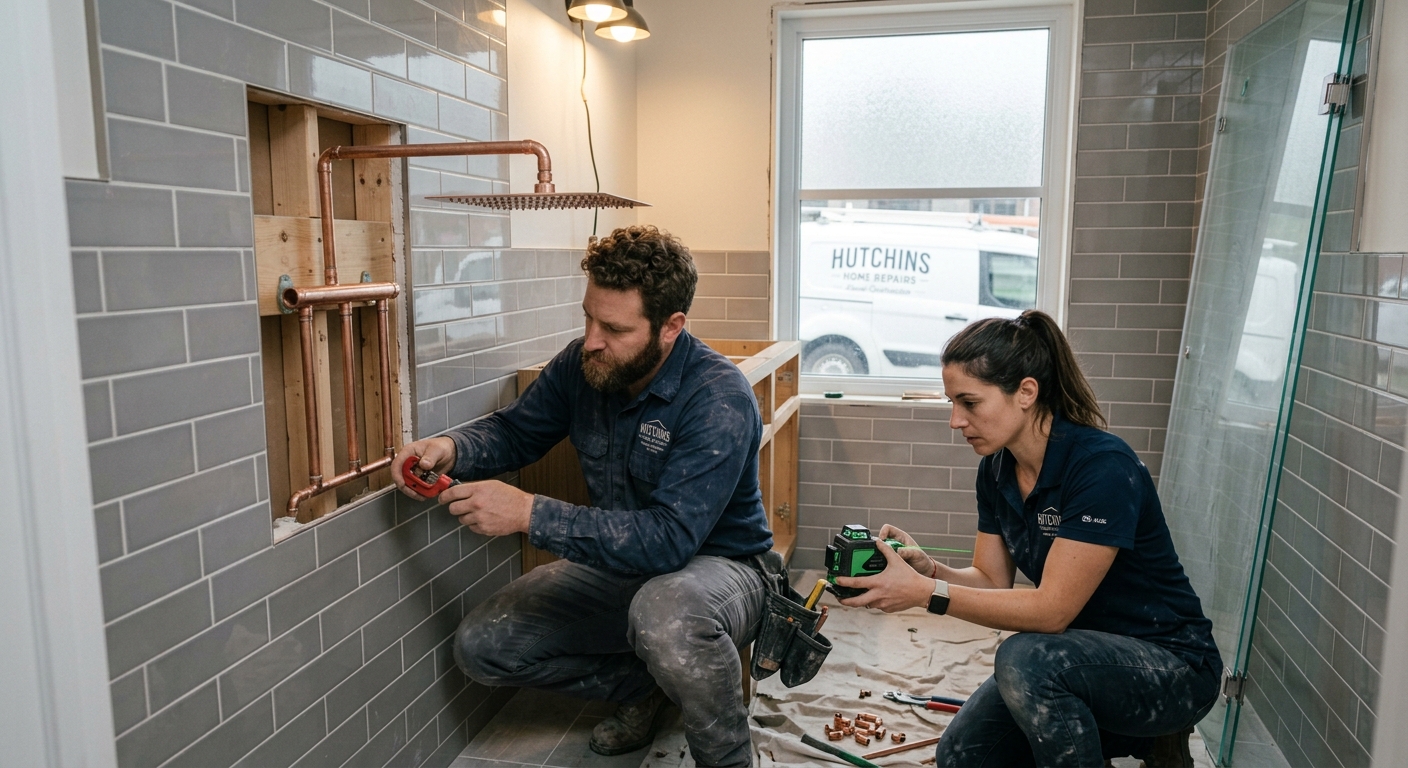
These issues are not unusual. They are the norm for renovation company websites, which is exactly why the opportunity is so large.
One Page Listing Every Service
A "Services" page with eight bullet points: kitchens, bathrooms, basements, decks, additions. Google cannot rank one page for eight different high-value searches. Each project type needs its own page with real depth.
No Service Area Pages
You serve twelve suburbs but your site only mentions your home city. Homeowners search "basement renovation [their town]," and you are nowhere. Each area you genuinely serve needs a page that can compete for those searches.
Portfolio Buried or Unindexed
Your best asset is your completed work, but the gallery is a lightbox slider with no text, no page URLs, and nothing Google can read. Project pages with descriptions, locations, and scope details rank and convert.
Weak Local Visibility
Not appearing in the Google Map Pack. Incomplete Google Business Profile with no service list, no photos, and no recent posts. Inconsistent business name, address, and phone across directories. All fixable, all costing you leads right now.
Low Domain Authority
Few or no quality backlinks. Contractors sit on obvious link opportunities they never use: supplier sites, trade associations, local chambers, home show listings, and community sponsorships. Competitors who work these channels outrank you.
Poor Conversion Flow
Traffic arrives but nobody requests a quote. No phone number in the header, a contact form buried three clicks deep, no click-to-call on mobile, and no clear next step on any service page. Rankings mean nothing if the site does not convert.
Buyer-Intent Mismatch
Ranking for "kitchen design ideas" brings Pinterest browsers, not buyers. Ranking for "kitchen renovation contractor [city]" brings homeowners ready to get quotes. Most contractor content targets the wrong end of the funnel entirely.
Duplicated Location Pages
Twenty city pages with the same paragraph and the city name swapped. Google recognizes this immediately and ranks none of them. Each area page needs genuinely distinct content about that market, projects completed there, and local specifics.
What Effective Renovation SEO Actually Looks Like
Six connected pieces. Skip any one of them and the strategy underperforms.
Project and Location Keyword Targeting
We map the searches homeowners actually use: project type plus location ("bathroom renovation Laval"), project type plus qualifier ("licensed basement contractor"), and problem-driven searches ("basement flooding repair"). Each keyword is assigned to one page so nothing competes internally.
Revenue Page Optimization
Your highest-margin project types get priority. If additions and full kitchen remodels are where you make money, those pages get rewritten first with proper structure, keyword placement, project photos, scope detail, and quote request CTAs. One well-optimized page can carry a service line for years.
Site Architecture
A structure Google can crawl and homeowners can navigate. Service categories at the top level, individual project pages beneath them, service area pages mapped to your real coverage, and a portfolio organized by project type. Authority flows from your homepage to the pages that generate quotes.
Internal Linking
Your basement finishing page should link to relevant completed projects, the service areas where you do that work, and any related content like permit guides or cost breakdowns. This passes ranking authority to revenue pages and keeps homeowners moving deeper into your site.
Content Support
Cost guides, timeline expectations, permit explanations, and material comparisons. Homeowners search this constantly during the research phase, months before they hire. Ranking for it puts you in front of them early and builds trust before the first call. This is where content marketing and SEO overlap.
Authority Building
Local citations, supplier and manufacturer partner listings, trade association profiles, chamber of commerce memberships, home show and expo mentions, and community sponsorship pages. Contractors have more legitimate link opportunities than most businesses and almost never pursue them.
Want to Know Where You Rank Right Now?
Book a strategy call and we will show you exactly which competitors are capturing the searches you should own, and what it would take to outrank them.
Get Your SEO Assessment →
Local SEO: Where Renovation Leads Are Won or Lost
Renovation is a proximity business. A homeowner in the west end is not hiring a contractor two hours away, and Google knows it. That is why the Map Pack, the three local results that appear above everything else, captures a disproportionate share of clicks for contractor searches.
Getting into that Map Pack is a specific discipline. Your Google Business Profile needs complete service listings, correct categories, real project photos posted regularly, and a steady flow of reviews. Your business name, address, and phone number need to match exactly across every directory Google checks. And your website needs location signals that confirm the areas you serve.
Service area pages are the other half. For every city, borough, or suburb where you genuinely work, there should be a page that speaks to that market: the housing stock, the typical project types, the permit authority, and projects you have completed there. Not a template with the city name swapped, which Google ignores, but content that proves you actually work there.
For contractors with a wide radius, we prioritize. The suburbs where your average project value is highest get built first, not the ones that happen to be alphabetically convenient.
Technical SEO for Renovation Websites
The foundation everything else sits on. Broken technical SEO caps your rankings no matter how good your content is.
Image Optimization
Renovation sites are image-heavy by nature, and that is usually what makes them slow. Uncompressed 4MB project photos straight off a phone will tank your load times. We compress, resize, convert to modern formats, and add descriptive alt text that also helps you rank in image search.
Site Speed
Homeowners comparing three contractors will not wait for a slow site. We optimize caching, code delivery, and hosting configuration to get load times under three seconds on mobile networks, which is also where Google draws its ranking threshold.
Mobile Performance
Most contractor searches happen on phones, often while the homeowner is standing in the room they want renovated. We fix tap targets, font sizes, gallery behaviour, and form usability so the mobile experience actually works.
Crawlability and Indexation
We make sure Google can find and index every service page, project page, and area page. That means fixing broken links, cleaning up redirect chains, submitting a proper sitemap, and removing thin pages that dilute your authority.
Structured Data
Local business schema, service schema, FAQ schema, and review markup where applicable. This helps Google understand your service areas, your project types, and your credibility, and can produce enhanced listings in search results.
Core Web Vitals
Google's page experience signals affect rankings directly. We monitor and optimize your Largest Contentful Paint, Interaction to Next Paint, and Cumulative Layout Shift scores, which image-heavy contractor sites commonly fail.
Content and Authority: The Two Things That Move Rankings Long Term
Technical fixes get you unblocked. Content and authority are what actually get you ranking above established competitors, and they are where most renovation companies stop short.
Content that captures homeowners early. The renovation buying cycle runs long. Someone planning a basement finish spends weeks researching costs, permits, timelines, and materials before contacting anyone. Every one of those questions is a search you can rank for. Cost guides, "how long does it take" pages, permit explainers, and material comparisons put you in front of homeowners months before they request quotes, and by the time they do, you are the company they already trust. Project pages do the closing work: real photos, real scope, real locations, and a clear path to a quote request.
Authority that competitors have not bothered to build. Renovation companies sit on link opportunities most businesses would envy. Manufacturer and supplier partner directories. Trade association member listings. Local chamber and BIA profiles. Home and garden show exhibitor pages. Community sponsorship pages from the minor hockey team you back. Award and certification bodies. Each of these is a legitimate, relevant link, and most contractors never claim a single one. We identify and pursue them systematically.
The two compound. More content gives you more pages worth linking to. More authority makes every new page rank faster. Contractors who commit to both pull away from competitors who treat SEO as a one-time project.
Our SEO Process for Renovation Companies
Structured, transparent, and built around the projects you want more of.
Discovery and Goals
We learn your project mix, your real service radius, your average job value by type, your crew capacity, and which work you want more of. We also learn which work you would rather stop getting calls about. That shapes everything downstream.
Technical and Content Audit
Full site crawl. We assess speed, mobile usability, indexation, on-page optimization, content depth, backlink profile, and Google Business Profile setup. Competitor analysis across each market you serve. Everything documented with priority and expected impact.
Keyword Research and Mapping
We build the full keyword map: project types, service areas, problem-driven searches, and research-phase queries. Each one assigned to a specific existing or planned page. This becomes the blueprint for all optimization and content work.
Strategy and Roadmap
A prioritized plan sequenced against your seasonal demand and margin priorities. What gets fixed now, what gets built next, and what we invest in over the following months. Clear timelines and honest expectations about how long rankings take.
Execution
We do the work: technical fixes, service page rewrites, new area pages, project page buildouts, Google Business Profile optimization, content production, and link acquisition. You review and approve content before it publishes.
Reporting and Iteration
Monthly reporting on rankings by project type and area, organic traffic, quote requests, and calls from search. We adjust priorities based on what is moving and what is not. See what we report on.
Why Renovation Companies Trust Us With Their SEO
Contractor-Specific Strategy
We understand service radius targeting, seasonal demand, project value tiers, and why fifteen good leads beat fifty bad ones when every site visit costs you half a day.
Data-Driven Priorities
Every recommendation traces back to keyword data, competitor analysis, and performance metrics. We sequence work by expected impact, not by what is easiest to bill for.
Bilingual Execution
Based in Montreal, fully bilingual in English and French. If you serve a bilingual market, we build and optimize content in both languages rather than translating one into the other.
Fully Integrated
SEO connects to Google Ads, web design, content, and GEO. One team, one strategy, no vendor handoffs.
More Renovation Marketing Services
SEO performs best alongside the right supporting services.
SEO for Renovation Companies: Frequently Asked Questions
How long does SEO take to produce quote requests for a contractor?
Most renovation companies see measurable ranking and traffic movement within 3 to 6 months. Google Business Profile improvements and technical fixes often show results faster, sometimes within weeks. Competitive project types in large metros can take 6 to 12 months to reach page one. We tell you upfront which of your target keywords are realistic in what timeframe.
We serve fifteen cities. Can SEO get us ranking in all of them?
Yes, but not simultaneously and not with duplicated pages. We build genuine service area pages for each market, prioritized by where your project values are highest. Google penalizes template pages with swapped city names, so each page needs real content about that market. We usually build these in waves over several months.
Can SEO help us attract bigger projects instead of small repair jobs?
Yes, and this is one of the most common reasons contractors hire us. It comes down to which keywords you target and how your pages are written. "Handyman near me" and "full home renovation contractor" attract completely different homeowners. We shift your keyword targeting, rewrite pages to signal your positioning and scope, and present your portfolio to match the budget tier you want.
Is SEO better than paying for leads from directory sites?
They serve different purposes. Directory leads are immediate but expensive, and the same homeowner is typically sold to several contractors, so you compete on price from the first call. SEO takes months to build but produces exclusive leads with no per-lead cost once you rank. Most contractors we work with use paid channels for immediate volume while SEO builds, then reduce dependence on directories over time.
Do we need to publish blog content?
You need content, though it does not have to look like a blog. Cost guides, permit explainers, project timelines, and material comparisons are what homeowners search during the research phase. That content captures them early and feeds authority to your service pages. Random posts about company news do nothing. See how we approach content.
How important is our Google Business Profile?
For a local contractor, it is one of the highest-impact assets you have. The Map Pack sits above organic results and captures a large share of clicks for renovation searches. A complete profile with accurate service categories, regular project photos, service area settings, and a steady review flow can produce leads before your website ranks for anything.
Will we need a new website?
Not always. Many contractor sites can be restructured and optimized without a rebuild: adding service pages, building area pages, fixing speed, and improving the quote flow. If the current site is on a platform that blocks proper SEO or the conversion flow is fundamentally broken, we will explain why a rebuild is the better investment and scope it separately.
How do you measure SEO success for a renovation company?
Rankings for your target project types and service areas, organic traffic growth, quote request form submissions, tracked phone calls from organic search, and where possible, the project value those leads turn into. We report monthly with clear numbers, not dashboards full of impressions and bounce rates.
Does SEO work for seasonal renovation businesses?
Yes, and seasonality actually makes SEO more valuable because it lets you get ahead of demand. Content targeting spring exterior work needs to be published and indexed in winter to rank when searches spike. We build the content calendar around your demand curve so pages are ranking before the season starts, not after it ends.
Who writes the content, and do we need to be involved?
We research and write everything. Your involvement is limited to a kickoff call, occasional questions about technical or scope details only you would know, and approving content before it publishes. Most contractor clients spend an hour or two a month on this.
What does SEO for a renovation company cost?
It depends on how many service areas and project types you want to target, the condition of your current site, and how competitive your market is. A single-city contractor targeting three project types is a different scope than a regional design-build firm covering twenty municipalities. Book a strategy call for a clear, itemized proposal.
Ready to Rank for the Projects You Want?
Book a strategy call. We will review your current rankings, show you which competitors are taking the searches you should own, and outline a clear plan to get in front of them.
Speak With an SEO Strategist →Or send us a message